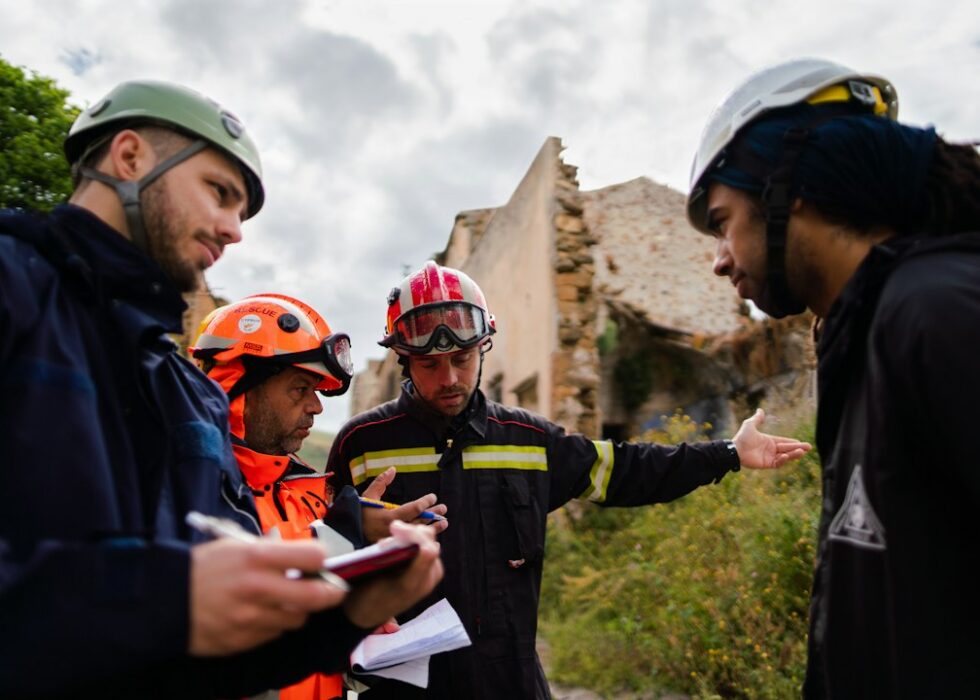
When Everything Goes Wrong, These Are the People You Call
Disaster recovery experts are specialized professionals who help organizations and communities prepare for, respond to, and rebuild after disruptive events, ranging from hurricanes and wildfires to cyberattacks and server failures.
Here is a quick breakdown of what they do and why it matters:
Preparedness means planning ahead with hazard mitigation, business continuity strategies, and realistic exercises before anything goes wrong. Response is the fast-moving phase where experts restore communication, coordinate resources, and support operations during an active event. Recovery focuses on the longer road back, including grant management, infrastructure rebuilding, data system restoration, and helping organizations return to stable operations. Mitigation is about lowering future risk through resilience planning, stronger infrastructure, and smart long-term strategy.
Whether you are a small business owner worried about a ransomware attack or a local government navigating a FEMA reimbursement process, the right expert makes the difference between a managed recovery and a prolonged crisis.
Think about this: a logistics program stood up in just two days after the Haiti earthquake delivered over 2.6 million meal rations within a week. That kind of outcome does not happen by accident. It happens because experienced professionals had frameworks, certifications, and field-tested plans ready to deploy.
The same principle applies to your business. Data loss, system outages, and natural disasters do not wait for a convenient moment. The gap between organizations that recover quickly and those that do not almost always comes down to one thing: preparation backed by real expertise.
This guide breaks down who disaster recovery experts are, what they actually do across every phase of the disaster lifecycle, and how to find the right partner for your organization’s specific needs.
The Essential Role of Disaster Recovery Experts
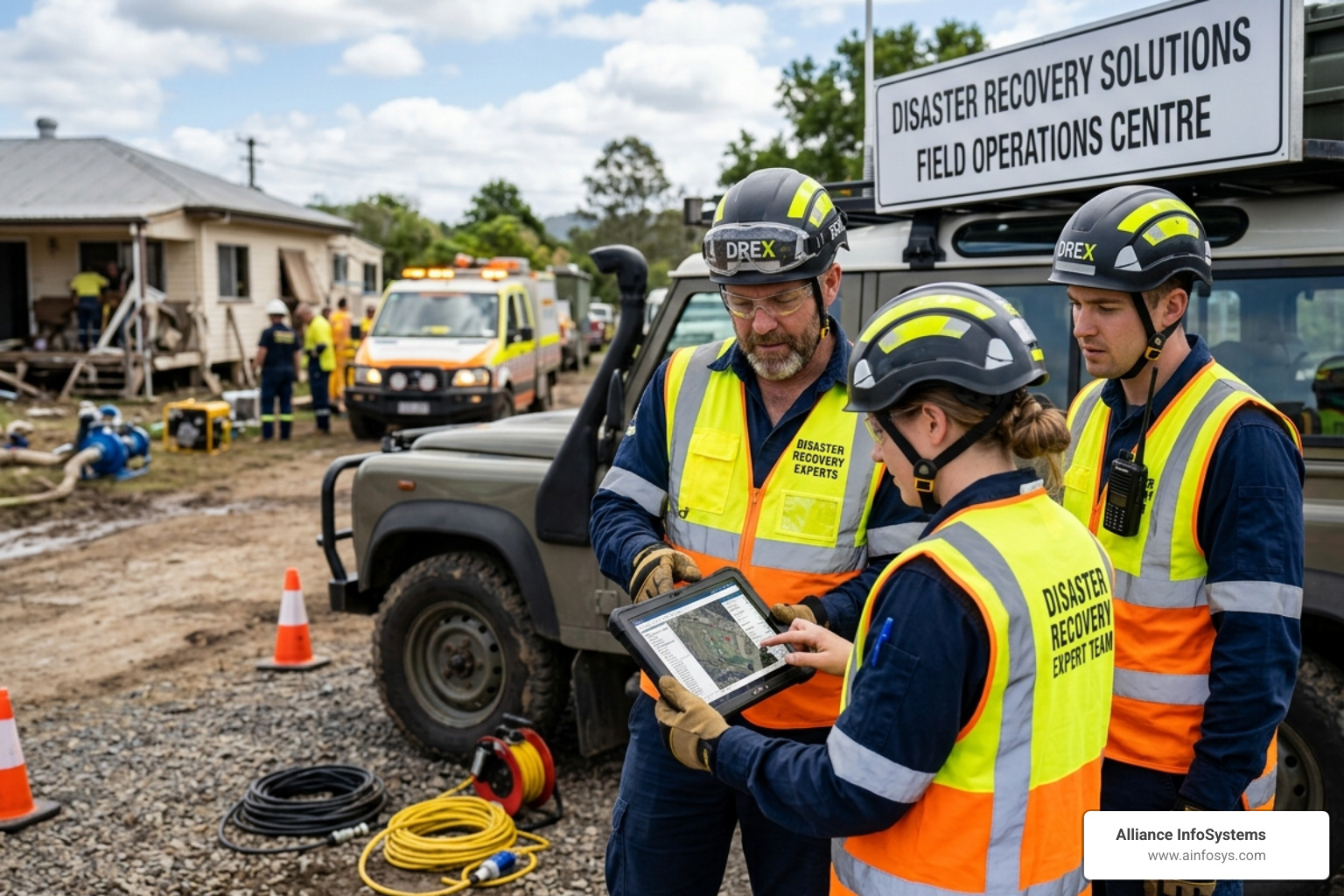
“Disaster” isn’t just a term for a hurricane or an earthquake. For a business in Maryland, a disaster could be a burst pipe in the server room, a sophisticated ransomware attack, or a prolonged power outage. This is where disaster recovery experts step in. Their primary goal is maintaining community safety and economic stability by ensuring that the organizations we rely on every day–from local hospitals to your favorite neighborhood shop–can stay operational.
The stakes are incredibly high. Understanding 4 Important Disaster Recovery Statistics and Why They Matter reveals that many businesses never reopen after a major data loss. Experts provide the risk management necessary to prevent your company from becoming a statistic. When the unthinkable happens, knowing Data Recovery 101: What to Do When Disaster Strikes is the first step toward survival.
Specialized Services Offered by Disaster Recovery Experts
True expertise goes beyond just “backing up files.” It involves a comprehensive suite of services designed to protect every facet of an organization:
Disaster recovery experts do far more than step in after something goes wrong. A big part of their job is hazard mitigation, which means spotting weak points before they turn into outages, security events, or equipment failures. That can include reducing single points of failure, improving backup practices, and putting physical and digital safeguards in place.
They also handle preliminary damage assessment. When systems go down, speed matters. Experts quickly identify what was affected, what data or services are at risk, and which systems need to come back first. That early assessment shapes the entire recovery process and helps limit downtime.
Another key service is strategic IT procurement. This often gets overlooked, but it matters a lot. Recovery experts do not just report on what failed. They help businesses make smarter hardware decisions over time, from server replacement planning to lifecycle management. The goal is to make sure the business has reliable equipment that fits its actual needs, instead of scrambling to buy the wrong gear during a crisis.
Just as important is business continuity planning. A strong Disaster Recovery Business Continuity Plan gives teams a practical roadmap for staying operational, even if the office, server room, or primary systems are unavailable. The best plans are not static documents. They are updated, tested, and built around how people really work.
How Disaster Recovery Experts Navigate Federal Grants
For government entities and non-profits, recovery is often a financial puzzle. disaster recovery experts are masters at navigating complex funding streams like FEMA Public Assistance and HUD Community Development Block Grant-Disaster Recovery (CDBG-DR) programs.
These professionals manage the entire grant lifecycle, from initial application to compliance auditing. They ensure that every dollar is accounted for and that technical documentation is airtight to maximize federal reimbursement. For IT-specific recovery, this might involve applying SQL Disaster Recovery Best Practices to ensure that critical databases containing grant information remain secure and recoverable.
Strategic Consulting and the Disaster Lifecycle

Recovery isn’t a single event; it’s a lifecycle. Strategic consulting involves designing programs that don’t just patch holes but build back better. Whether it’s infrastructure restoration or housing recovery, the goal is long-term resilience.
For instance, look at how Rockville Rises: Bouncing Back from Any Disaster showcases the power of local resilience. By planning for the long term, communities can ensure that their infrastructure is hardened against the specific threats they face.
Success Stories in Large-Scale Recovery
The impact of disaster recovery experts is best seen in history. From the multi-decade recovery efforts following Hurricane Katrina to the massive $1.2 billion housing recovery programs managed after Hurricane Sandy, these experts provide the “boots on the ground” experience that theoretical knowledge simply cannot replace.
In our own backyard, Charm City Resilience: Baltimore’s Business Continuity Playbook serves as a prime example of how urban centers can prepare for disruptions. These success stories prove that while disasters are inevitable, total failure is not.
Specialized Catastrophe Management in Maryland
Maryland has unique needs. From the coastal risks of the Chesapeake Bay to the high-density tech corridors near D.C., regional response requires local knowledge. Environmental restoration and IT infrastructure hardening must go hand-in-hand. If you are looking for local support, there are 6 Painless Ways to Find IT Disaster Recovery Maryland Providers that understand our specific climate and regulatory environment.
Profiles in Resilience: The Anatomy of an Expert Team
What makes someone a true expert? It’s a blend of technical mastery and field-tested experience. A top-tier team holds certifications like Certified Business Continuity Professional (CBCP) and Certified Information Security Manager (CISM).
They also understand the strategic value of vendor-neutral expertise. When it comes to hardware acquisition, you don’t want someone who is just trying to sell you a specific brand. You want a partner who focuses on the lifecycle management of your assets, ensuring your IT procurement strategy serves your long-term recovery goals.
Technical Mastery and Global Impact
Advanced disaster recovery experts apply complexity theory to identify cascading failures–those “domino effect” moments where one system failure brings down five others. They benchmark their programs against international standards like ISO 22301.
A key part of this mastery is testing. A plan that hasn’t been tested is just a piece of paper. Following a Disaster Recovery Testing Complete Guide ensures that when the “real thing” happens, the team moves with muscle memory rather than panic.
Academic Contributions to Emergency Management
The field is constantly evolving. Many leading experts contribute to the industry through research and by planning for high-profile events like the upcoming 2026 FIFA World Cup. This academic rigor ensures that emergency management protocols stay ahead of emerging threats, whether they are environmental or digital.
Technology and Strategy in Modern Recovery
Modern recovery relies on a mix of high-tech tools and solid strategy. From GIS mapping for physical disasters to grants automation software that speeds up reimbursement, technology is the backbone of the industry.
| Feature | Cloud-Based Replication | On-Premise Backup |
|---|---|---|
| Recovery Speed | Fast (depends on bandwidth) | Very Fast (local network) |
| Physical Safety | High (off-site) | Low (on-site risks) |
| Cost | Monthly Subscription | Upfront Hardware Cost |
| Control | Managed by Provider | Fully Internal |
Choosing the right mix is essential. For many, Professional Data Backup Solutions Essential for Business involve a hybrid approach that offers the best of both worlds.
Data Integrity and Server Restoration
When a server goes down, every minute of downtime costs money. Experts focus on specialized protocols like Server Backup Best Practices to ensure that whether you are running SQL or Linux, your data is consistent and clean. The goal is always to Minimize Data Loss through redundant systems and frequent, automated snapshots.
The Role of Strategic IT Procurement
We believe that IT procurement is the foundation of disaster resilience. Procurement is the strategic lifecycle management of the hardware that actually runs your business.
By maintaining a Regular Backup Schedule on hardware that is properly maintained and regularly refreshed, you eliminate the “technical debt” that often causes systems to fail during a crisis.
Frequently Asked Questions about Disaster Recovery
How do experts maximize FEMA and HUD funding?
Experts use “funding navigation” to identify every eligible expense. They often use CDBG-DR funds as a match for FEMA grants, ensuring the community pays as little out-of-pocket as possible. Case studies like Annapolis: Where Business Continuity Never Takes a Vacation show how meticulous documentation leads to better funding outcomes.
What is the difference between emergency response and long-term recovery?
Emergency response is about immediate life safety—putting out fires and rescuing survivors. Long-term recovery is a multi-year process of rebuilding infrastructure, restoring the local economy, and reducing technical debt so the next disaster isn’t as damaging.
How can a business select the right recovery partner?
Look for experience metrics (years in the field), technical certifications (CBCP, CISM), and local expertise. Most importantly, choose a partner who offers strategic value in procurement. You need someone who understands the hardware lifecycle, not just someone who can click “restore” on a backup file.
Conclusion
At Alliance InfoSystems, we’ve spent over 20 years serving as the disaster recovery experts Maryland businesses trust. Our approach isn’t about one-size-fits-all templates; it’s about flexible, cost-efficient services tailored to your unique risks.
We specialize in strategic IT procurement and lifecycle management, ensuring your hardware is a source of strength rather than a vulnerability. From managing vendor relations to implementing robust Data Backup & Recovery solutions, we are here to ensure that when disaster strikes, your data stays safe and your business stays open. Don’t wait for the next storm—let’s build your resilience today.