
Cloud Based Services Are Reshaping How Businesses Operate
Cloud based services are on-demand computing resources delivered over the internet, including storage, software, infrastructure, and analytics, without the need to own or maintain physical hardware.
Here are the most widely used types at a glance:
| Service Type | What It Does | Common Example |
|---|---|---|
| SaaS | Ready-to-use software over the internet | Gmail, Salesforce |
| IaaS | Virtual servers, storage, and networking | AWS, Microsoft Azure |
| PaaS | Development tools and platforms | Google App Engine |
| FaaS | Run code in response to events, no server management | AWS Lambda |
| XaaS | Any IT capability delivered as a service | Disaster Recovery as a Service |
Deployment models:
- Public cloud – Shared infrastructure managed by a third-party provider
- Private cloud – Dedicated infrastructure for a single organization
- Hybrid cloud – A mix of public and private environments
- Multicloud – Using services from multiple providers simultaneously
For most small to midsize businesses, the biggest draw is simple: you stop paying for hardware you don’t fully use and start paying only for what you actually need.
The shift has been dramatic. As the costs of building and maintaining IT infrastructure continue to rise, more businesses are moving their applications and data to cloud-based infrastructure. The flexibility, reliability, and availability that cloud offers were simply out of reach for most businesses a decade ago.
Today, major providers like AWS, Google Cloud, and Microsoft Azure have made enterprise-grade computing accessible to companies of any size. AWS alone spans 123 Availability Zones across 39 geographic regions worldwide. Google Cloud reports that 9 out of the top 10 retail companies trust its platform. The options are vast, and choosing the right fit matters.
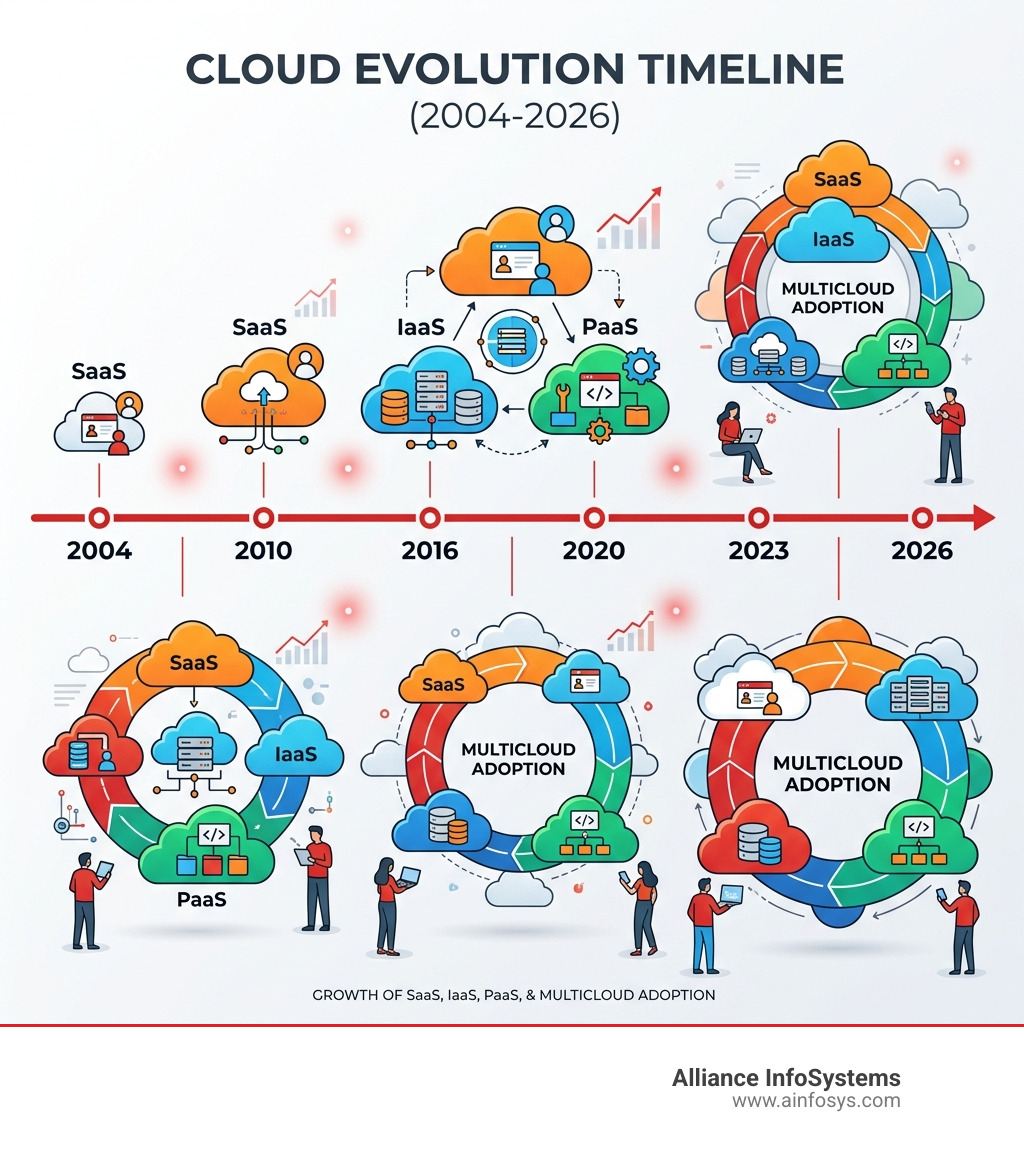
Understanding the Architecture of Cloud Based Services
To truly grasp how cloud based services work, it helps to think of them as a layered cake. At the bottom, you have the raw materials (the hardware), and at the top, you have the finished product (the software you use every day). This layered architecture allows businesses to choose exactly how much of the “baking” they want to do themselves.
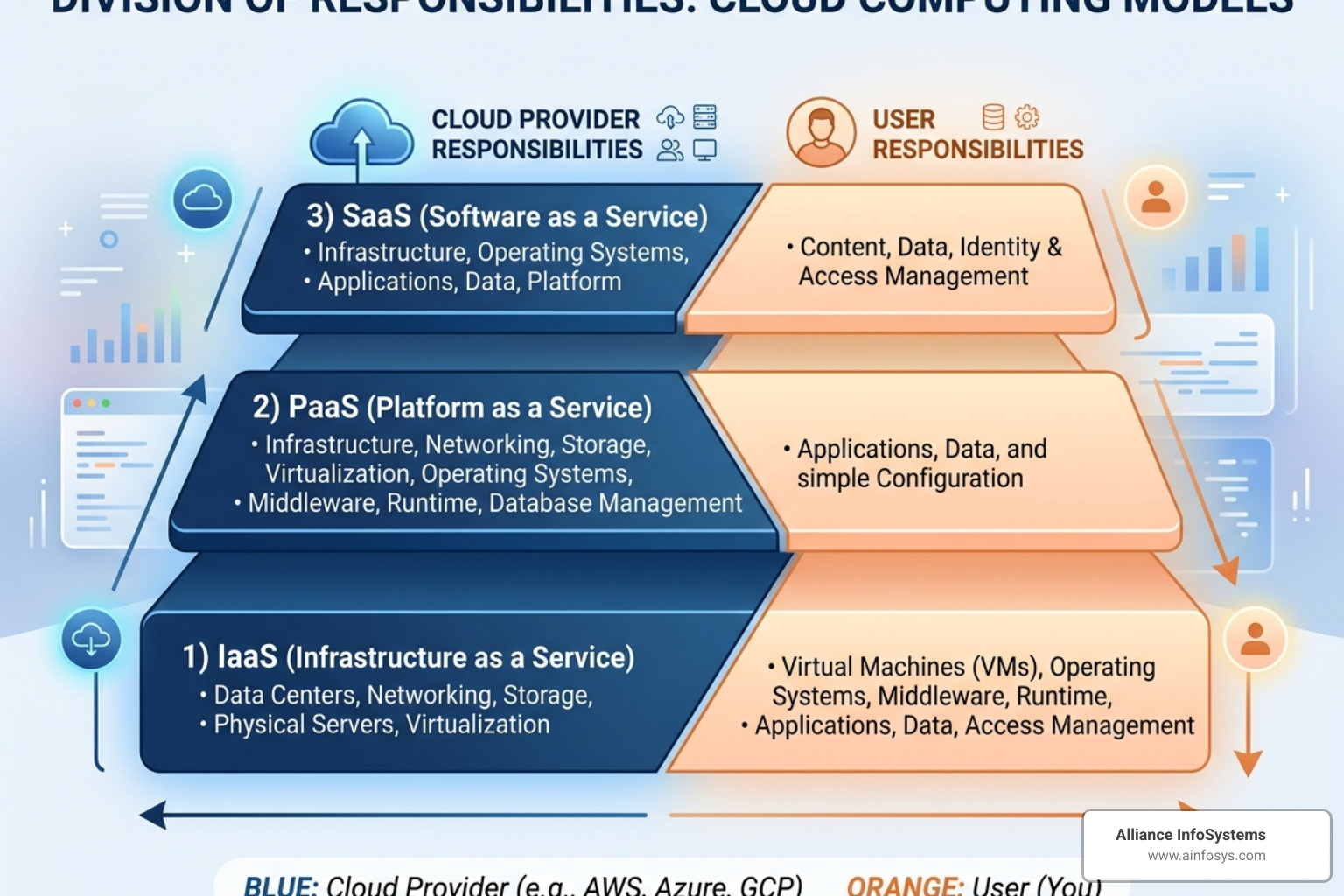
The Service Models Explained
- Infrastructure as a Service (IaaS): Think of this as renting the land and the foundation. You get access to servers, storage, and networking. You’re responsible for the operating system and the apps, but you don’t have to worry about “racking and stacking” physical hardware in a hot server room.
- Platform as a Service (PaaS): This is like renting a fully equipped kitchen. The stove, fridge, and counters are there; you just bring your ingredients (code) to cook up an app. It’s perfect for developers who want to build and deploy applications without managing the underlying servers.
- Software as a Service (SaaS): This is the most common model. It’s like going to a restaurant. The meal is prepared, served, and cleaned up for you. You simply log in via a browser and use the software.
- Function as a Service (FaaS): Often called “serverless” computing, this allows you to run specific snippets of code only when triggered by an event—like automatically resizing an image the moment a user uploads it.
- Anything as a Service (XaaS): This is the “catch-all” for specialized services delivered over the web, such as Disaster Recovery as a Service (DRaaS) or Communications as a Service (CaaS).
Delivery Models: Where Does the Data Live?
Choosing a delivery model is about balancing security, control, and cost. Many of our Maryland clients find that Cloud vs On-Premises Explained for Beginners is the best place to start when deciding between local hardware and these models:
- Public Cloud: Resources are shared among many customers. It’s highly scalable and cost-effective because you share the cost of the infrastructure with millions of other users.
- Private Cloud: This is dedicated entirely to your organization. It’s often used by industries with strict regulatory requirements, like healthcare or banking, where data privacy is the top priority.
- Hybrid Cloud: This is the “best of both worlds” approach. You might keep sensitive customer data on a private cloud but use the public cloud for your daily email and collaboration tools.
- Multicloud: In 2026, this is becoming the standard. Businesses use multiple providers (e.g., AWS for storage and Google Cloud for AI) to avoid “vendor lock-in” and take advantage of specialized features from each.
The 7 Best Cloud Based Services for 2026 Compared
As we navigate through April 2026, the cloud market has matured into a powerhouse of innovation. Whether you are a startup in Baltimore or an established enterprise in the DC metro area, these seven providers lead the pack in capabilities and reliability.
| Provider | Primary Strength | Best For | Market Insight |
|---|---|---|---|
| AWS | Global Scale & Depth | Enterprise Infrastructure | 123 Availability Zones |
| Google Cloud | Data Analytics & AI | Machine Learning / Big Data | 26-34% lower TCO on BigQuery |
| Microsoft Azure | Windows Integration | Hybrid Cloud Environments | Seamless Office 365 Sync |
| Salesforce | Customer Relationships | Sales & Marketing Teams | Pioneer of the SaaS model |
| Oracle Cloud | Database Performance | High-performance ERP | Optimized for Oracle DBs |
| IBM Cloud | Hybrid Cloud & Security | Regulated Industries | Focus on Mainframe Integration |
| Alibaba Cloud | Asia-Pacific Reach | Global E-commerce | Dominant in Eastern Markets |
1. Amazon Web Services (AWS)
As the pioneer of modern cloud computing, Cloud Computing Services – Amazon Web Services (AWS) remains the heavy hitter. Their infrastructure is staggering, featuring 123 Availability Zones within 39 Geographic Regions. AWS offers over 240 comprehensive services, making it the “Swiss Army Knife” of the cloud. If you can imagine a digital workload, AWS has a service to run it.
2. Google Cloud Platform (GCP)
Google has positioned itself as the leader in intelligence. AI and Cloud Computing Services | Google Cloud is the go-to for companies that need to make sense of massive amounts of data. Their BigQuery tool offers a significantly lower three-year Total Cost of Ownership (TCO) compared to other data warehouses. Furthermore, their Gemini AI integration has been a game-changer, with companies like Snap seeing a 2.5x boost in engagement after deploying Google’s multimodal AI capabilities.
3. Microsoft Azure
For businesses already deep in the Microsoft ecosystem, Azure is a natural fit. It offers unparalleled integration with Windows Server, SQL Server, and Microsoft 365. Azure is particularly strong in the hybrid cloud space, making it easier for businesses to bridge the gap between their office servers and the cloud.
4. Salesforce
While the others provide the “pipes” and “electricity,” Salesforce provides the “furniture.” As the world’s leading CRM, it has expanded into a massive platform for sales, service, and marketing. It’s the gold standard for SaaS, proving that you don’t need to manage a single server to run a multi-billion dollar business.
5. Oracle Cloud
Oracle has made huge strides by focusing on high-performance computing and autonomous databases. For organizations that rely on complex ERP systems, Oracle provides a cloud environment optimized specifically for those heavy-duty data tasks.
6. IBM Cloud
IBM focuses heavily on the hybrid cloud needs of large enterprises. They provide excellent support for “bare metal” servers and have a strong reputation in highly regulated sectors where security and legacy system integration are non-negotiable.
7. Alibaba Cloud
While primarily dominant in Asia, Alibaba Cloud is an essential consideration for Maryland businesses looking to expand their digital footprint globally. They offer robust e-commerce and big data solutions that rival the “Big Three” in many technical benchmarks.
For a deeper dive into how these platforms handle server-side tasks, check out our A Comprehensive Guide to Cloud Server Computing.
Common Use Cases for Cloud Based Services
How are businesses actually using these tools in 2026? It’s no longer just about “storing files.”
- Web Hosting: Scaling your website instantly during a traffic surge.
- Big Data & Analytics: Processing millions of customer data points to predict buying trends.
- Disaster Recovery: Automatically backing up your entire business environment to an offsite location so you can recover in minutes, not days.
- IoT and AI Workloads: Managing “smart” devices or running chatbots that use generative AI to talk to customers.
- Application Development: Building and testing new software in a “sandbox” environment without buying any new hardware.
Understanding the Benefits of Cloud-Based Storage and Why It Matters is crucial for any business looking to modernize its data strategy.
Security and Compliance in Cloud Based Services
One of the biggest “cloud myths” is that the cloud is less secure than an on-site server. In reality, providers like Google and AWS spend billions on security—far more than any individual business could.
However, security is a shared responsibility. The provider secures the “cloud itself” (the data centers and hardware), while you are responsible for securing “what’s in the cloud” (your data and who has access to it). Tools like Cloud Armor protect against DDoS attacks, while services like Mandiant provide expert threat intelligence. We always recommend robust data encryption and multi-factor authentication to keep your digital assets under lock and key.
Strategic IT Procurement: Choosing Your Provider
Choosing a cloud provider isn’t just a technical decision; it’s a strategic one. This is where IT procurement becomes vital. At Alliance InfoSystems, we focus strictly on the acquisition and management of IT assets and services throughout their entire lifecycle.

When we help our clients with procurement, we focus on:
- Vendor Management: Negotiating the best rates and ensuring the provider actually delivers on their promises.
- Service Level Agreements (SLAs): Making sure you have a “99.999% uptime” guarantee so your business never goes dark.
- IT Asset Lifecycle: Planning for the acquisition, scaling, and retirement of hardware and software services.
- Cost Optimization: The cloud can be cheaper, but if left unmanaged, costs can spiral. We help you find 4 Surprising Ways the Cloud Reduces Costs in Your Business to keep your budget on track.
Maximizing ROI with Cloud Based Services
To get the most out of your investment, you need to embrace the “pay-as-you-go” model. In the old days, you’d buy a server that was 80% empty “just in case” you grew. In 2026, you pay for exactly what you use today. If you grow tomorrow, the cloud scales with you instantly. This reduces capital expenditure (buying big machines) and turns it into operational expenditure (a monthly utility bill), which is much easier on your cash flow. If you’re ready to make the jump, our Cloud Migration Guide can help you plan a seamless transition.
Overcoming Challenges in Cloud Adoption
While we love the cloud, we’re also realists. There are hurdles to clear.
- Vendor Lock-in: It can be hard to move your data once you’re settled. This is why we often advocate for a multicloud or open-source strategy.
- Migration Complexity: Moving years of data isn’t as simple as “drag and drop.” You have to account for Common Challenges Cloud Data Migration, such as data formatting and bandwidth limits.
- Hidden Costs: Training your staff on new systems or paying for “egress fees” (the cost of taking your data out of the cloud) can surprise you if you aren’t prepared.
- Legacy Integration: Some older “homegrown” software simply wasn’t built for the cloud. We help businesses determine whether to “rehost” (move as-is) or “refactor” (rewrite for the cloud) their apps.
Frequently Asked Questions about Cloud Based Services
What are the primary types of cloud based services?
The “Big Three” are SaaS (software like email), PaaS (platforms for building apps), and IaaS (the underlying virtual servers and storage). Newer models like FaaS (serverless) and XaaS (everything as a service) are also gaining massive traction in 2026.
How do cloud based services improve business scalability?
In a traditional setup, scaling meant buying, shipping, and installing new servers—a process that took weeks. With cloud based services, you can add storage or processing power with a few clicks. This allows you to handle seasonal spikes (like holiday shopping) without owning idle hardware the rest of the year.
What factors influence the cost of cloud based services?
Costs are typically driven by three things: Compute (how much “brain power” you use), Storage (how much data you keep), and Data Transfer (how much data moves in and out of the system). Many providers also offer tiered pricing, where older, “colder” data is cheaper to store than data you need to access every second.
Conclusion
The world of cloud based services moves fast, but you don’t have to navigate it alone. Whether you’re looking to reduce costs, boost your security, or finally move away from that aging server in the closet, the right strategy makes all the difference.
At Alliance InfoSystems, we’ve spent over 20 years serving as Maryland’s IT leaders. We aren’t just here to sell you a subscription; we’re here to act as your strategic procurement partners, focusing strictly on the acquisition and management of IT assets and services. We manage the vendors, optimize the costs, and ensure your technology lifecycle is handled with precision. From Baltimore to the DC suburbs, we provide the flexible, customized, and cost-efficient solutions that modern businesses demand.
Ready to see how virtualization can transform your operations? Explore our Cloud Virtualization Services and let’s build your business’s future together.