
Why Linux Cloud VPS Hosting is the Smart Choice for Growing Businesses
Linux cloud vps hosting combines the power of dedicated servers with the flexibility of cloud computing, offering a cost-effective way to run applications and host websites without the overhead of physical hardware. Options are available across all budget levels, from budget-friendly shared CPU plans to high-performance enterprise solutions.
Key Features to Compare:
- NVMe SSD storage for faster performance
- CPU type (shared vs. dedicated)
- RAM and bandwidth allocations
- Data center locations
- Uptime guarantees (99.95%+ recommended)
A Virtual Private Server (VPS) gives you dedicated resources (CPU, RAM, storage) on a shared physical server, ensuring better performance and control than traditional shared hosting. Linux is an ideal VPS operating system because it’s free, stable, and highly customizable, giving you full root access without licensing fees.
The “cloud” aspect means your VPS runs on a network of servers. If one server fails, your VPS automatically moves to another, ensuring higher uptime and reliability than traditional VPS hosting. This setup offers the perfect middle ground for growing businesses, providing more control than shared hosting without the high cost of dedicated servers. According to industry data, hosting companies with proper security measures grow 22% faster than those without—making a secure, reliable VPS provider crucial for success.
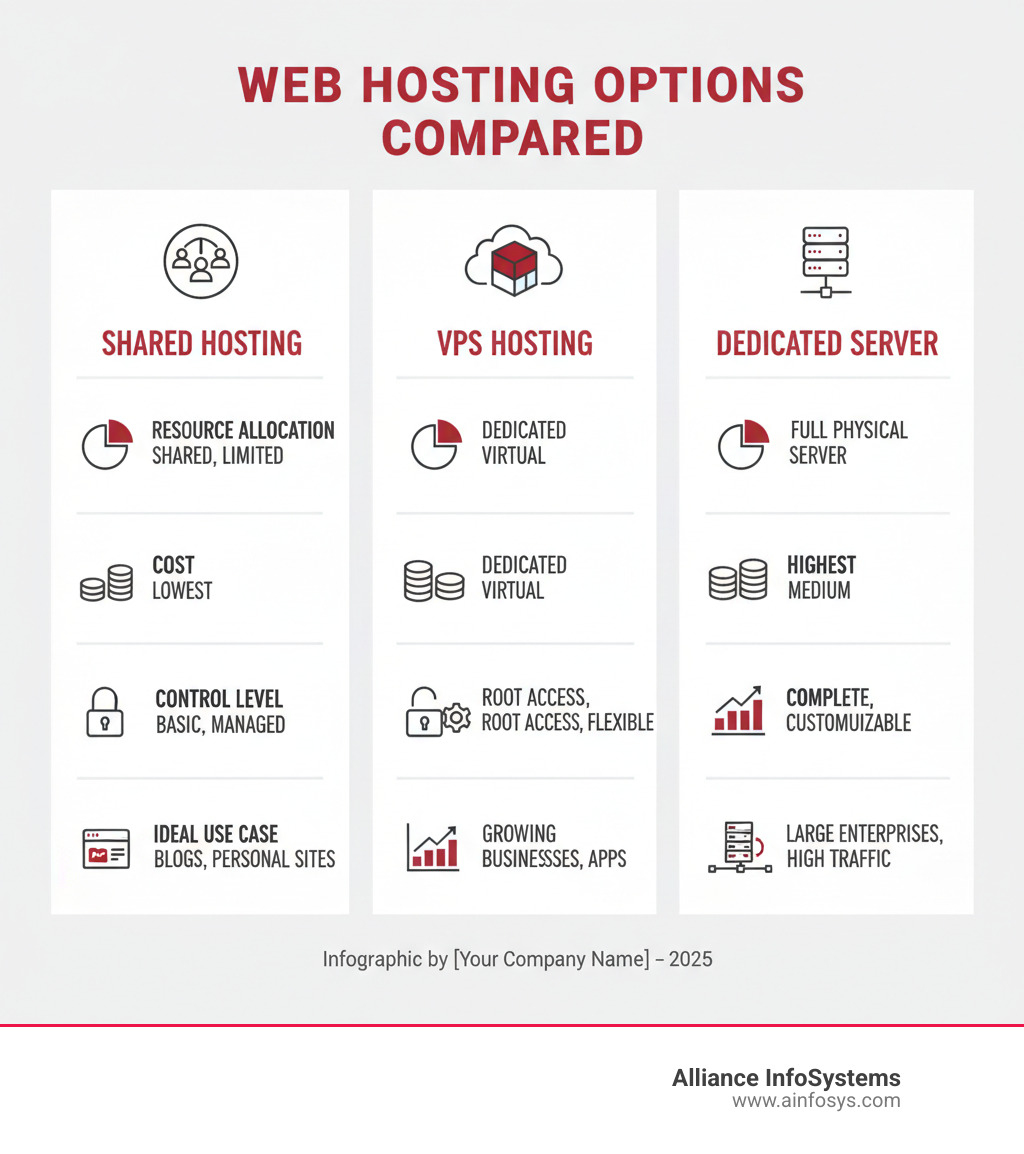
Simple linux cloud vps hosting word guide:
Why Choose a Linux Cloud VPS? Core Benefits and Features
Linux cloud vps hosting is the Goldilocks solution for many businesses—a perfect balance of affordability and control. You get your own slice of a powerful server with guaranteed resources that nobody else can touch.
Performance is a key benefit. Unlike shared hosting where a “noisy neighbor” can slow down your site, a VPS dedicates CPU, RAM, and storage to you alone. This means your website stays fast and responsive, which is critical for user experience.
Scalability is where cloud hosting shines. As your business grows, you can upgrade your CPU, RAM, or storage in minutes, often with just a few clicks and a quick reboot. This means you only pay for the resources you need now, with the flexibility to grow on demand.
On the security front, your VPS operates in an isolated environment, so problems on another user’s VPS won’t affect yours. Linux itself is renowned for its security, and most providers add extra layers of protection like firewalls and DDoS mitigation. Research shows that hosting companies with proper security measures grow 22% faster than those without, highlighting its importance.
Reliability is improved by the cloud architecture. A cloud VPS runs on a network of interconnected servers. If one server has issues, your VPS can automatically move to a healthy one with little to no downtime, keeping your services online.
For more insights into how cloud infrastructure can transform your operations, check out our guide on Cloud Server Computing Advantages You Haven’t Considered.
Key Features to Look for in a Linux cloud vps hosting Provider
When shopping for linux cloud vps hosting, focus on these key features to find the right fit.

- NVMe SSD storage: This modern storage technology offers lightning-fast performance, which is essential for database-intensive applications and overall system responsiveness.
- CPU cores and RAM: These are the brain and short-term memory of your server. More cores and RAM allow you to handle more tasks and run applications smoothly. Plans vary widely, so match the resources to your specific workload.
- Bandwidth: This determines how much data can flow to and from your server. Many providers advertise generous traffic allowances, but always check the fine print for fair usage policies or throttling, especially if you run a high-traffic site.
- Uptime SLA: Look for a Service Level Agreement (SLA) of 99.9% or higher. Features like automatic failover, where your VPS moves to a healthy server during a hardware issue, are what keep your site online 24/7.
- Data center locations: Hosting your server closer to your primary audience reduces latency and improves load times. Choose a provider with data centers in the geographic regions your customers are in.
- Customer support: Even experts need help sometimes. Look for 24/7 support through multiple channels. A responsive support team is invaluable when issues arise.
Want to dive deeper into virtual environments? Our Cloud Virtualization Guide 2025 covers everything you need to know.
Common Use Cases for Linux cloud vps hosting
The versatility of linux cloud vps hosting makes it suitable for a wide range of applications.
- Web hosting: From personal blogs to business websites and e-commerce stores, a VPS provides the dedicated resources needed for consistently fast loading times, which is critical for retaining visitors and boosting conversions.
- Application development: Developers can spin up isolated environments to build, test, and deploy applications without affecting production systems. It’s a perfect sandbox for experimentation.
- Database hosting: The dedicated resources and high-speed NVMe storage are ideal for running MySQL, PostgreSQL, or NoSQL databases efficiently, especially with large datasets or high transaction volumes.
- Game servers: A properly configured VPS can deliver the consistent performance and low latency required for a smooth, lag-free gaming experience.
- Email and VPN servers: You can run your own email server for complete control over your data privacy or set up a personal VPN server for secure, encrypted internet access.
To understand more about different virtual environments, read our article on What’s the Difference Between Virtual Servers and Virtual Desktops?.
Decoding Your Options: How to Select the Right VPS Configuration
Picking the right linux cloud vps hosting configuration is about matching the server’s capabilities to your specific needs, budget, and future plans.
First, consider your workload requirements. A simple blog has very different needs than a busy e-commerce store or a complex application with heavy database queries. Understanding your demands upfront prevents you from overpaying for unused resources or suffering from a sluggish, underpowered server.
Your budget constraints also play a major role. Entry-level VPS plans are incredibly affordable, with more robust plans offering dedicated resources and guaranteed performance at a higher price point. The goal is to find the sweet spot where your server performs well without breaking the bank.
Finally, always plan for future growth. A key advantage of linux cloud vps hosting is its scalability. Choose a provider that makes it easy to upgrade your plan as your traffic or business grows. This flexibility saves you from complex migrations down the road.
For more insights into where cloud technology is heading, check out our thoughts on Cloud Computing Trends.
Shared CPU vs. Dedicated CPU
One of the first decisions you’ll face is choosing between shared and dedicated CPU resources.
Shared CPU plans are budget-friendly and ideal for websites with moderate traffic, development environments, or applications that don’t require constant peak performance. Your virtual CPU cores share the physical processor with other users, so performance can fluctuate depending on the server’s overall load. For many general-purpose tasks, this offers excellent value.
Dedicated CPU plans give you exclusive access to your CPU cores. This guarantees consistent, predictable processing power, which is crucial for CPU-intensive applications like video encoding, high-traffic e-commerce sites, or game servers where performance stability is non-negotiable. While more expensive, the reliability can be invaluable for business-critical workloads.
Choosing the Right Linux Distribution
When you set up your linux cloud vps hosting, you’ll choose a Linux distribution (“distro”). This choice affects server management, software compatibility, and available support.

- Ubuntu: The most popular choice, known for its user-friendliness, extensive documentation, and massive community. It’s an excellent starting point for beginners and experts alike.
- Debian: The foundation for Ubuntu, prized for its rock-solid stability and security. It’s a favorite among experienced administrators for production servers where uptime is critical.
- AlmaLinux & Rocky Linux: These are free, community-driven alternatives to Red Hat Enterprise Linux, offering enterprise-grade stability without the cost. They are gaining popularity for business environments.
Consider your technical comfort level, software requirements, and the value of community support when making your choice. The best distro is the one that fits your skills and project needs.
The Importance of Data Center Location
Where your linux cloud vps hosting server is physically located directly impacts performance, user experience, and even legal compliance.
Latency, the delay in data transfer, is the primary concern. Hosting your server closer to your audience results in faster load times and a better user experience. Faster sites also tend to rank better in search engines.
For businesses with a global audience, using a provider with multiple data centers allows you to deploy servers in different regions, ensuring a fast experience for all users. Furthermore, regulations like GDPR may require you to store data from European citizens within the EU, making a European data center a necessity for compliance.
Working with a provider who understands your regional business environment and operates in your time zone can also be a significant advantage. To explore more about this, see our article on Choose Local Cloud Server Provider.
Unmanaged vs. Managed Linux Cloud VPS Hosting
When setting up your Linux cloud vps hosting, you must decide between an unmanaged or managed service. This choice depends on your technical expertise, available time, and business focus.
An unmanaged VPS gives you complete control. You are responsible for all aspects of server administration, including OS installation, software configuration, security patching, monitoring, and backups. This requires significant technical skill and time but offers maximum flexibility at the lowest cost. It’s ideal for experienced developers and system administrators.
However, the hands-on management required can be a major time sink, pulling you away from your core business activities. The hidden cost of an unmanaged VPS is often your own time and attention.
This is where managed VPS services shine. Your hosting provider handles the heavy lifting: server setup, security monitoring, patching and updates, and backups. They act as your outsourced technical team, ensuring your server is healthy and secure.
The trade-off is a higher price for the convenience and peace of mind (cost savings vs. time savings). For businesses without dedicated IT staff, the value of reclaimed time and expert oversight often far outweighs the additional expense.
For insights into modern server environments, take a look at our article on Evolution Cloud Server Containers.
When to Choose Managed Services
Choosing managed services for your Linux cloud vps hosting is a strategic business decision. It becomes essential when you want to focus on your core business rather than troubleshooting server issues.
Many small to medium-sized businesses lack in-house IT staff with specialized server administration skills. Hiring a full-time system administrator is expensive. Managed services provide that expertise without the overhead, acting as an extension of your team.
At Alliance InfoSystems, we’ve helped businesses steer these challenges for over 20 years. Founded in Maryland in 2004, we specialize in flexible, customized, and cost-efficient services that give you the benefit of a dedicated IT department without the high cost.
Managed services are also invaluable for complex environments involving multiple applications or databases. Experts can configure, optimize, and secure these setups, preventing headaches and ensuring smooth operations.
Perhaps the biggest benefit is proactive support. A good managed service provider monitors your server, identifies potential issues before they become critical, and implements preventative measures to minimize downtime. At Alliance InfoSystems, we pride ourselves on this proactive approach.
Choosing managed services is an investment in peace of mind and operational efficiency. If you’re ready to explore IT management and security solutions that work for your business, take a look at our Managed IT Services.
Essential Security and Cost Considerations
When setting up Linux cloud vps hosting, securing your data and controlling costs are top priorities. A well-secured server prevents the high costs associated with data breaches, while smart budgeting ensures you invest wisely.
On the financial side, providers offer different pricing models. Pay-as-you-go plans bill you hourly for what you use, offering great flexibility for short-term projects. However, costs can add up if you forget a server is running. Fixed monthly pricing is more predictable, making budgeting straightforward. Many providers offer discounts for longer commitments, which can lead to significant savings.
Be wary of hidden fees. Some low base prices are offset by charges for extra bandwidth, backups, or premium support. Always read the fine print to understand the total cost.
Regarding data protection, it’s a shared responsibility. Your provider secures the physical infrastructure, but you are responsible for securing the data and applications on your VPS. This means configuring firewalls, setting up backups, and managing user access. Think of it like renting an apartment: the building has security, but you still need to lock your own door. To clear up more misconceptions, see our article on Cloud Myths Debunked.
Investing in security enables growth. Research shows that hosting companies with proper security grow 22% faster than those without, making it a sound business decision.
Key Security Features to Implement
Securing your Linux cloud vps hosting is an ongoing process. Implement these layers of defense to protect your data and reputation.
- DDoS protection: Most reputable providers include network-level protection to filter out malicious traffic from Distributed Denial of Service attacks before it reaches your server.
- Firewalls: Configure a server-side firewall (like
ufworfirewalld) to control traffic, allowing only what your applications need and blocking the rest. - SSL encryption: Essential for any site handling sensitive data. SSL encrypts data between your server and users, preventing interception. Free certificates are widely available through services like Let’s Encrypt.
- Regular backups: Your insurance policy against data loss from accidents, software errors, or hardware failure. Automate backups and store them in a separate location for easy restoration. For guidance, see our Linux Server Backup Best Practices.
- User access control: Use strong, unique passwords or, even better, SSH keys. Follow the principle of least privilege by giving users only the minimum permissions they need.
Understanding Pricing Models and Traffic Policies
Understanding pricing models and traffic policies is key to avoiding budget surprises.
Most Linux cloud vps hosting providers use hourly billing (often with a monthly cap) or fixed monthly pricing. Hourly billing offers flexibility for short-term use, while fixed pricing provides predictability for long-term projects.
When it comes to traffic, you’ll see various terms:
- Included bandwidth: Your plan comes with a set amount of data transfer per month. For most businesses, this is more than enough.
- Overage charges: If you exceed your included bandwidth, you’ll be charged for the extra data, typically per gigabyte. These charges can add up quickly on high-traffic sites.
- Unlimited/unmetered traffic: This often means your connection speed is capped at a certain rate based on your plan, rather than having no limits at all. While you won’t face overage fees, high usage might lead to throttling. Always read the provider’s fair usage policy.
For most businesses, standard bandwidth allowances are sufficient. However, if your service is data-intensive, calculate your needs carefully to choose a plan that won’t lead to unexpected costs.
At Alliance InfoSystems, we’ve spent over 20 years helping clients steer these technical and financial decisions. We ensure your infrastructure supports your goals without breaking the bank. Explore our IT Solutions to learn more.
Frequently Asked Questions about Linux VPS
Here are answers to some of the most common questions about Linux cloud vps hosting.
What is the main difference between a Cloud VPS and a traditional VPS?
The key difference is the underlying infrastructure. A traditional VPS runs on a single physical server, creating a single point of failure; if that server goes down, so does your VPS. A Cloud VPS runs on a network of interconnected servers. This distributed setup provides high availability, as your VPS can be automatically moved to a healthy server if one fails, resulting in minimal to no downtime and greater resilience.
Do I need technical skills to use a Linux VPS?
It depends on the service type. For an unmanaged Linux VPS, yes, you need strong technical skills. You’ll be responsible for all server administration, including setup, security, updates, and troubleshooting via the command line. For a managed Linux VPS, the provider handles these technical tasks for you. This makes it accessible to business owners and users without a dedicated IT background, as the heavy lifting of server management is taken care of.
How do I scale my Linux Cloud VPS?
Scalability is a core feature of Linux cloud vps hosting. Most providers offer an intuitive control panel where you can upgrade resources like CPU, RAM, and storage on-demand. The process usually involves just a few clicks and may require a quick reboot. This allows your server to grow with your business, easily handling traffic surges or increased application needs without complex migrations or significant downtime.
Conclusion
Linux cloud vps hosting offers a powerful combination of flexibility, performance, and scalability, making it an excellent choice for a wide range of users. It strikes the perfect balance, providing the control of a dedicated server at a fraction of the cost, with the reliability of cloud infrastructure.
We’ve covered how to choose the right configuration, the importance of security, and the difference between managed and unmanaged services. Implementing proper security isn’t just about protection—it’s a proven strategy for business growth. The key is to make informed choices that align with your needs, budget, and technical comfort level.
At Alliance InfoSystems, we’ve been guiding businesses through these critical technology decisions for over 20 years. Our Maryland-based team understands that the right hosting solution is a strategic decision. We provide flexible, customized support to handle the technical complexities so you can focus on your core business.
Whether you’re launching your first VPS or optimizing an existing setup, having the right partner makes all the difference. We’re here to help ensure your technology investments deliver real, measurable value.
Ready to explore how cloud virtualization can transform your business operations? Get started with our expert cloud virtualization services and let’s build something great together.