Why Business Continuity Matters for Annapolis Companies
Business continuity Annapolis services help local companies prepare for, respond to, and recover from disruptions—from hurricanes and flooding to cyberattacks and power outages. If you’re looking for continuity services in Annapolis, here are your primary options:
- Local Managed IT Service Providers – Offer data backup, disaster recovery, and 24/7 monitoring
- IT Consulting Firms – Provide business impact analysis, risk assessments, and plan development
- Cloud Backup and Recovery Services – Deliver automated, offsite data protection solutions
- Specialized Data Recovery Companies – Handle recovery from device failures, including iPhones, Android devices, and hard drives
- Government Resources – Annapolis Office of Emergency Management and Anne Arundel County Emergency Management offer planning frameworks and support
In today’s uncertain business environment, any number of critical events could threaten your employees, infrastructure, market share, or even your company’s continued viability. The statistics are sobering: 43% of businesses impacted by a disaster never re-open, and 29% close permanently within two years of a disaster.
Small businesses are especially vulnerable. Without a solid continuity plan, a single hurricane, flood, cyberattack, or extended power outage can mean the difference between a temporary setback and permanent closure.
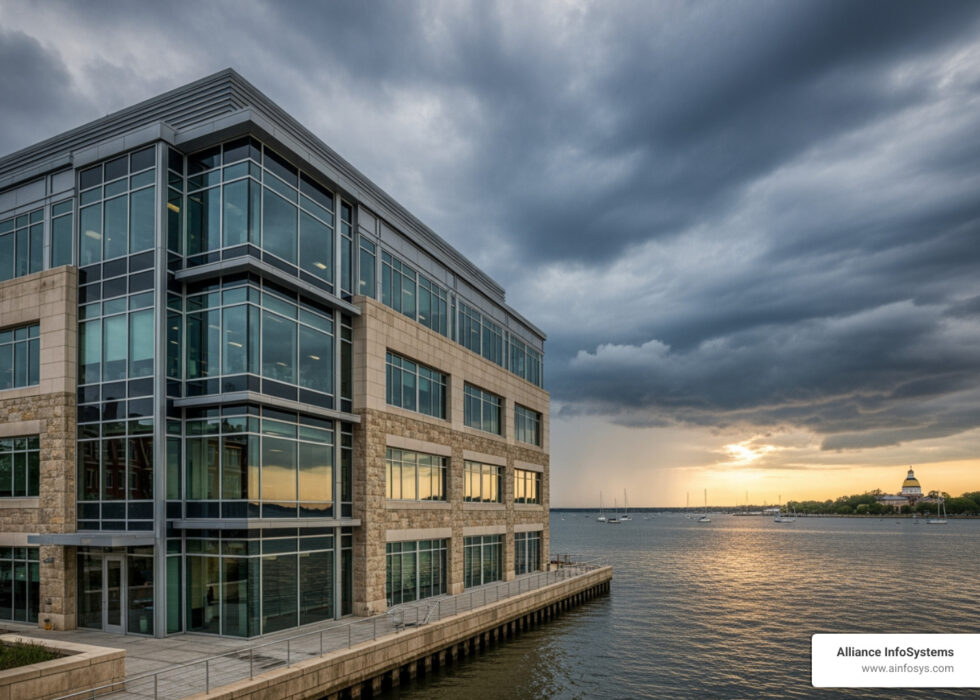
Annapolis businesses face unique challenges. Located on the Chesapeake Bay, companies here must prepare for Atlantic Hurricane Season (June 1-November 30), coastal flooding, and storm surges. The proximity to Washington, DC, also makes Annapolis businesses potential targets for sophisticated cyberattacks.
But here’s the good news: businesses that create and implement a Business Continuity Plan are significantly more likely to recover and remain open after a disaster. The framework isn’t complicated—it just requires planning, the right technology partners, and regular testing.
Why Your Annapolis Business Can’t Afford Downtime
Imagine the Annapolis harbor on a sunny day, busy with tourists and local businesses thriving. Now picture it after a severe storm, or worse, imagine your business operations grinding to a halt due to a cyberattack. The thought alone is enough to send shivers down a business owner’s spine. For businesses in Annapolis, downtime isn’t just an inconvenience; it can be a catastrophic event.
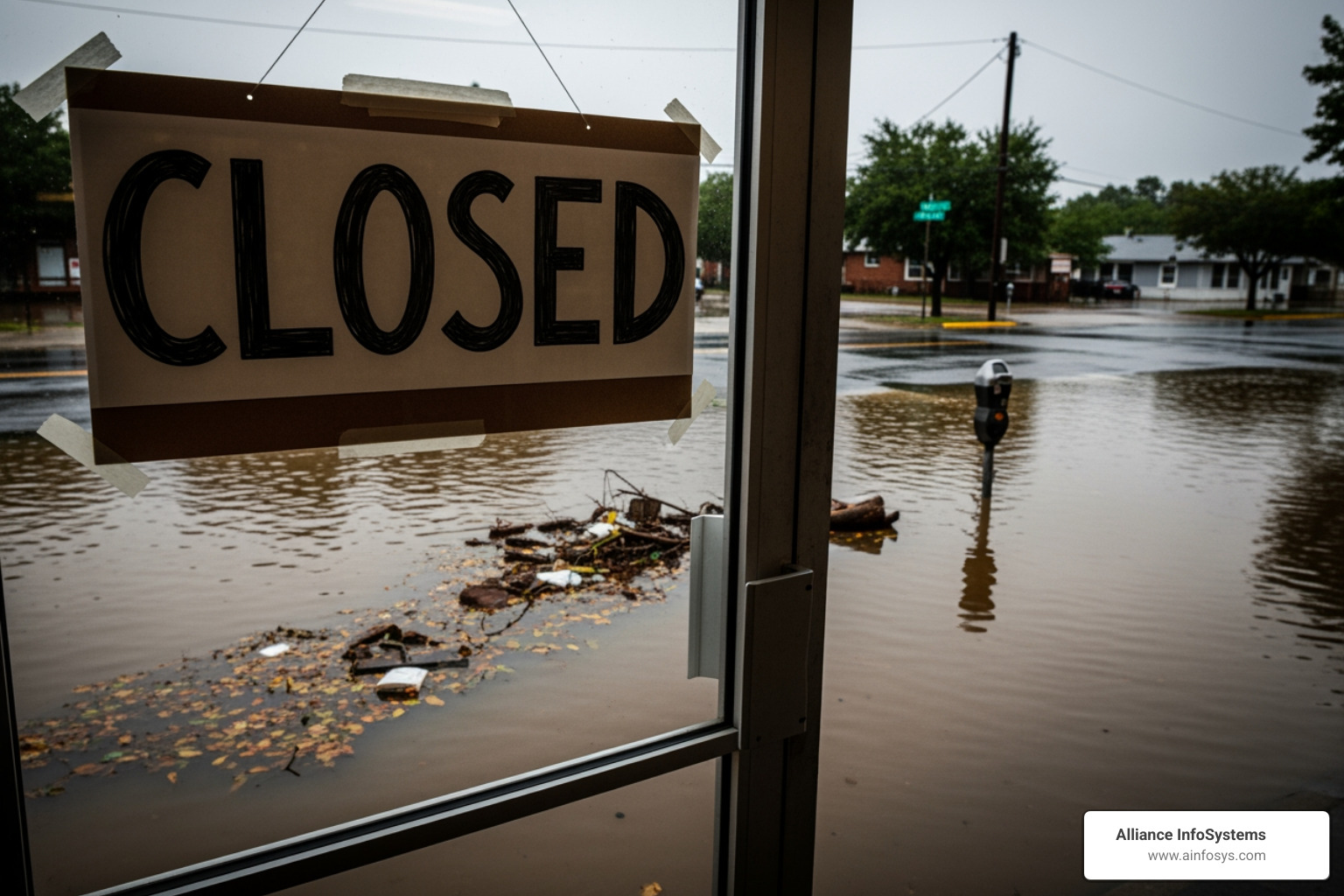
Why is business continuity Annapolis so crucial? Because our local businesses face a unique blend of threats that can quickly turn a productive day into a prolonged crisis. From unpredictable weather patterns to sophisticated digital threats, the dangers are real, and the costs of inaction are staggering.
Understanding Local Threats
Living and working in Annapolis, we’re no strangers to the beauty of the Chesapeake Bay, but we also understand its potential for disruption.
- Natural Disasters: The Atlantic Hurricane Season, which runs from June 1 to November 30, is a yearly reminder of the threat of tropical storms and hurricanes. These can bring high winds, heavy rain, and storm surges, leading to widespread power outages and severe flooding. Even less severe weather, like heavy snow or ice, can cause significant operational disruptions.
- Man-made Disasters: Beyond nature’s fury, businesses can face power outages from grid failures, utility issues, or even accidental damage. These can affect not just your immediate premises but also critical infrastructure in the surrounding area.
- Cybersecurity Threats: In our increasingly digital world, cyberattacks are a constant, evolving menace. Annapolis’s proximity to Washington, D.C., and its status as a vibrant economic hub can make local businesses attractive targets. We’re talking about ransomware that locks down your entire system, phishing scams that trick employees into revealing sensitive data, and other sophisticated attacks that can compromise your data, reputation, and financial stability. These aren’t just big-city problems; they’re everyday realities for businesses of all sizes.
Calculating the True Cost of an Outage
When operations cease, the costs start piling up immediately. It’s more than just lost revenue for the hours your doors are closed or your website is down. We’re talking about a cascade of negative impacts:
- Lost Revenue: This is the most obvious. Every minute your business isn’t operational is a minute you’re not making sales or providing services.
- Employee Productivity Loss: Your team might be ready to work, but if systems are down, they can’t. This means paying salaries for unproductive time.
- Customer Churn: If customers can’t reach you, access your services, or get their needs met, they’ll go elsewhere. Winning them back can be incredibly difficult, if not impossible.
- Supply Chain Disruption: If your operations are linked to suppliers or partners, your downtime can create a ripple effect, damaging relationships and future opportunities.
- Reputational Damage: In today’s interconnected world, news of a business disruption spreads fast. A compromised reputation can be far more damaging and harder to recover from than financial losses.
- Regulatory Compliance Risks: Depending on your industry, data breaches or prolonged outages can lead to significant fines and legal repercussions if you fail to meet data security and privacy regulations.
- Potential Liabilities: Data loss, especially of private customer data, can expose your business to costly litigation.
As we noted earlier, the statistics don’t lie: 29% of businesses close permanently within two years of a disaster. This grim reality underscores the importance of proactive planning. To dive deeper into the financial implications, check out our insights on 4 Important Disaster Recovery Statistics and Why They Matter. The cost of a technology outage can be far more significant than the cost of preventative planning for data continuity.
The Core Components of a Robust Business Continuity Plan
A robust business continuity Annapolis plan isn’t just a document; it’s a living strategy that safeguards your business against the unexpected. Think of it as your business’s superhero cape, ready to deploy when disaster strikes. Crafting this plan involves several key components, each playing a vital role in ensuring your operations can withstand and recover from disruptions.

At Alliance InfoSystems, we believe a comprehensive plan should address:
- Business Impact Analysis (BIA): Understanding what really matters.
- Risk Assessment: Identifying what could go wrong.
- Communication Strategy: Ensuring everyone knows what’s happening.
- Recovery Objectives (RTO/RPO): Setting targets for getting back to normal.
- Plan Testing and Maintenance: Making sure it actually works when you need it.
Step 1: Conduct a Business Impact Analysis (BIA)
Before you can plan for recovery, you need to understand what you’re recovering from and for. This is where a Business Impact Analysis (BIA) comes in. It’s a systematic process that helps us identify the critical functions of your business and the potential impact if they are disrupted.
- Identifying Essential Functions: What are the core activities your business absolutely cannot operate without? For a restaurant, it might be the POS system; for a law firm, access to client files. These are your essential functions.
- Defining Acceptable Downtime: For each essential function, how long can it realistically be down without causing severe damage to your business? This helps establish your Recovery Time Objective (RTO).
- Prioritizing Critical Operations: Not all functions are equally critical. The BIA helps us prioritize which systems and processes need to be restored first to minimize impact.
- Resource Dependencies: What resources (people, technology, facilities, suppliers) are essential for these functions to operate?
- What are the vulnerabilities to vital resources and records? The BIA helps us pinpoint weaknesses in your current setup.
By understanding these elements, we can create a targeted and efficient recovery strategy. For more on this, our Disaster Recovery Business Continuity Plan resource offers valuable insights.
Step 2: Develop a Crisis Communication Plan
When a crisis hits, clear and timely communication is paramount. Panic and misinformation can be as damaging as the disaster itself. A well-thought-out crisis communication plan ensures everyone—from employees to customers—receives accurate information.
- Internal Communications (Employees): How will you reach your team if normal channels are down? This includes designated spokespeople, clear protocols for remote work, and updated contact information. Cross-training employees for essential roles is also a best practice.
- External Communications (Customers, Suppliers): Your customers and suppliers need to know what’s happening and what to expect. Transparency builds trust.
- Redundant Communication Channels: We recommend redundant communication systems. This might include:
- Text message alerts (like Alert Annapolis, which we’ll discuss later)
- Email (using a cloud-based service accessible from anywhere)
- Social media (pre-drafted messages for quick deployment)
- Website updates (hosted on a resilient platform)
- Dedicated crisis hotline or voicemail
- Designated Spokespeople: Who is authorized to speak on behalf of your business during a crisis? Having a clear chain of command prevents confusion.
- Contact Information Management: Keeping up-to-date contact lists for all key personnel, employees, suppliers, and critical customers, stored both digitally and physically off-site, is non-negotiable.
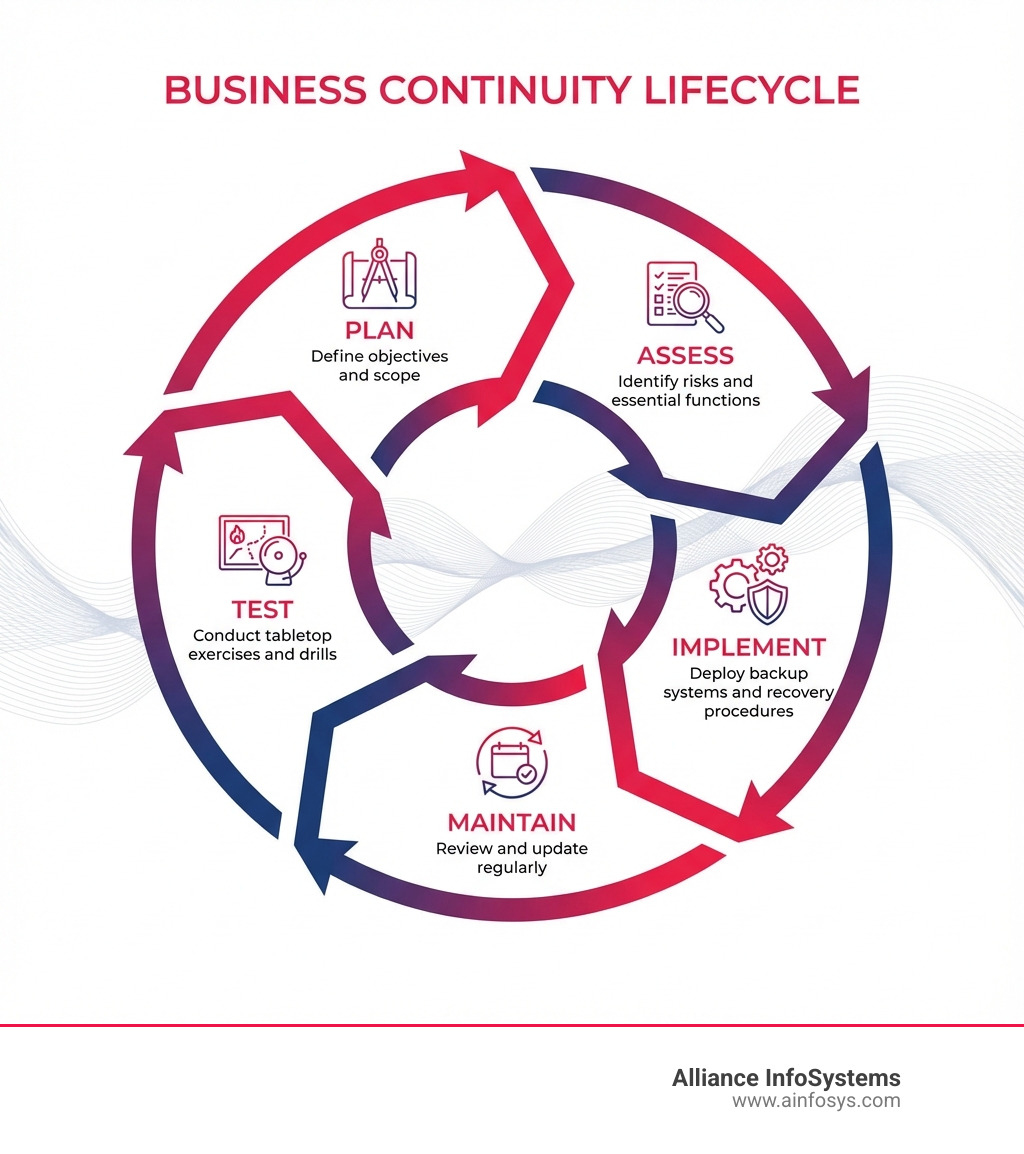
Step 3: Implement, Test, and Maintain Your Plan
A plan sitting on a shelf is just an expensive binder. The real value comes from its implementation, testing, and regular review.
- Implement: This involves putting the necessary infrastructure in place, like data backup solutions, alternative work sites, and communication tools.
- Test: We recommend various testing methods:
- Tabletop Exercises: These are discussions among key personnel to walk through different disaster scenarios and identify gaps in the plan. They’re great for training and refining strategies.
- Full-scale Drills: For more critical components, a full-scale drill simulates an actual disaster, testing systems, people, and processes in a real-world environment.
- What would happen if a flood affected roads near a facility?
- What would happen if power was cut off for an extended period?
- Do employees know where the shelter location is at work?
- Are employees following their assigned roles in training?
- Would the current plan be effective if a specific event took place?
- Regular Plan Reviews: Your business evolves, and so do the threats. Your plan should be reviewed and updated at least annually, or whenever there are significant changes to your operations, technology, or personnel.
- Employee Training: All employees should be aware of the plan, and key personnel should be thoroughly trained in their specific roles during a disaster.
For a comprehensive guide on ensuring your plan is ready for anything, our Disaster Recovery Testing Complete Guide provides invaluable insights.
Leveraging Technology for Business Continuity in Annapolis
In our modern world, technology isn’t just an enabler; it’s the backbone of business continuity Annapolis. From keeping your data safe to ensuring your operations can quickly spin back up, smart use of technology is non-negotiable. It’s about building resilience into the very fabric of your digital infrastructure.
At Alliance InfoSystems, we understand that leveraging technology effectively means focusing on:
- Data backup solutions: Your absolute first line of defense.
- Disaster Recovery as a Service (DRaaS): Making recovery fast and efficient.
- Cloud computing benefits: Flexibility, scalability, and accessibility.
- Cybersecurity measures: Protecting your digital assets from malicious attacks.
- Network Security: Ensuring your communication highways are safe.
Data Backup and Recovery: Your First Line of Defense
If there’s one thing we can’t stress enough, it’s the criticality of your data. Without it, most modern businesses simply cannot function. Your data backup and recovery strategy is truly your first and most vital line of defense.
- Automated Backups: Say goodbye to old-fashioned manual backup systems! The best practice is to automate the continual backup of data and systems. This ensures that your valuable information is consistently protected without human error or oversight.
- On-site vs. Off-site Storage: While on-site backups offer quick recovery for minor incidents, they’re vulnerable to local disasters (fire, flood, theft). Off-site storage, especially in a secure data center or the cloud, protects your data from physical harm to your premises.
- Cloud Backup Solutions: This is where things get really exciting for business continuity Annapolis. Cloud backup and recovery offer robust and scalable solutions. By storing data in remote servers, cloud backup ensures information is safe from local hardware failures, natural disasters, and other on-site risks. Recovery from the cloud is swift and can be performed from any location with internet access, providing flexibility and convenience. Plus, improved security measures, such as encryption, ensure data privacy and protection in the cloud. We offer comprehensive Data Backup & Recovery services designed to keep your business data safe and accessible.
- Specific Device Recovery: Data loss isn’t just about servers. It can happen on individual devices too. We’re equipped to handle:
- iPhone/Android Data Recovery: Retrieving lost or deleted files, photos, contacts, and app data from mobile devices due to accidental deletion, system crashes, or device damage. Restoring an iPhone from a backup, for instance, means all apps, settings, and personal data are reinstated, ensuring continuity.
- Data Recovery from External Hard Drives: Specialized software and professional services can retrieve important data from external hard drives after hardware failure or file corruption. It’s crucial to avoid further use of the drive when data recovery is needed to prevent overwriting.
The goal is to Minimize Data Loss and ensure that if disaster strikes, your critical information is not only safe but also rapidly recoverable.
The Power of a Local Managed IT Partner for business continuity Annapolis
Navigating the complexities of business continuity, especially the technological aspects, can be overwhelming. This is where partnering with a local Managed IT Service Provider (MSP) like us, Alliance InfoSystems, becomes invaluable for business continuity Annapolis.
- Proactive Monitoring: We don’t wait for things to break. Our teams proactively monitor your networks, servers, and devices 24/7, often identifying and resolving issues before they impact your operations. This preventative approach is key to minimizing downtime.
- 24/7 IT Support: When an issue does arise, you need immediate help. Our dedicated support ensures you have experts available around the clock, ready to troubleshoot and restore services quickly.
- Local Expertise: We understand the unique challenges and opportunities of doing business in Maryland. Our local presence means we’re familiar with regional threats, common infrastructure issues, and can offer personalized, on-site support when needed.
- Cost-effectiveness vs. In-house Team: For many small to mid-sized businesses, maintaining an in-house IT department with diverse expertise can be prohibitively expensive. Outsourcing your IT to us provides access to a broader range of skill sets and technical resources at a fraction of the cost. It helps you meet aggressive growth plans without the overhead. Our Managed IT Services Maryland offers a clear path to boosting efficiency and security.
- Scalability: As your business grows, your IT needs change. A managed IT partner can easily scale services up or down, ensuring your technology always aligns with your business size and nature, without requiring you to constantly hire or retrain staff.
Key Annapolis and Maryland Resources for Your Plan
While we provide the technological backbone for your business continuity Annapolis plan, remember that you’re not alone. There’s a wealth of government support and community preparedness resources available to help businesses strengthen their resilience. Leveraging these resources can significantly improve your planning efforts.
Local and State Emergency Management
Both local and state government agencies are dedicated to fostering a culture of safety and resilience.
- Annapolis Office of Emergency Management (OEM): The Annapolis OEM is dedicated to comprehensive disaster readiness, response, recovery, and resilience efforts for our city. Their mission includes coordinating all-hazards emergency preparedness, response, recovery, and mitigation efforts. They provide vision, direction, and subject matter expertise to develop an overall culture of safety and resiliency within the city. Businesses can benefit from their guidance on local threats and preparedness strategies.
- Alert Annapolis Sign-up: We highly recommend signing up for Alert Annapolis. This system delivers general or emergency messages to homes, businesses, cell phones, or answering machines via text message, e-mail, or phone call. It’s a critical tool for staying informed during a crisis.
- Maryland Department of Emergency Management (MEMA): At the state level, MEMA supports local jurisdictions like Annapolis in their emergency management efforts. The Department of Information Technology (DoIT) acts as the Lead State Agency for the Electronic Infrastructure State Coordinating Function, supporting MEMA.
- COOP Plan Framework: DoIT’s Business Continuity program focuses on Continuity of Operations (COOP) plans and a Records Management Program. The COOP plan provides the framework that ensures essential functions and services will continue in the event of an emergency. Its goal is to reestablish essential functions within 12 hours after the event and maintain the essential functions for up to 30 days. This state-level framework serves as an excellent benchmark for your own business continuity planning.
These governmental bodies also offer invaluable insights into Business Preparedness resources from Anne Arundel County, helping you tailor your plan to specific local hazards and guidelines.
Frequently Asked Questions about Business Continuity in Annapolis
We often hear similar questions from Annapolis business owners as they begin their journey toward robust business continuity. Let’s tackle some of the most common ones.
How quickly should my business be able to recover after a disaster?
This is a critical question, and the answer isn’t one-size-fits-all. The state’s COOP plan (Continuity of Operations) aims to reestablish essential functions within 12 hours and maintain them for up to 30 days. This is an excellent benchmark, demonstrating what’s possible with strategic planning. However, your specific Recovery Time Objective (RTO)—the maximum tolerable duration of disruption for a business process—will depend on your Business Impact Analysis (BIA).
For example, a small retail shop might tolerate a day or two of downtime, while a financial services firm might need to be back online within minutes or hours. The BIA helps you determine how long you can survive without a critical function before suffering unacceptable losses. A solid Disaster Recovery plan is key to achieving your RTO, ensuring you have the strategies and technology in place to meet your recovery goals.
What is the single most important technology for business continuity?
While business continuity Annapolis is a multi-faceted strategy involving people, processes, and technology, a comprehensive and regularly tested Data Backup & Recovery solution is arguably the most critical technological component. Think about it: without your data—your customer lists, financial records, operational software, and intellectual property—recovering operations for most modern businesses is nearly impossible.
All the communication plans, alternative work sites, and trained personnel in the world won’t help if your core business data is lost or inaccessible. Effective backup and recovery solutions ensure your data is protected, redundant, and can be quickly restored, forming the bedrock upon which all other recovery efforts are built.
Can I create a business continuity plan myself?
Yes, you absolutely can begin the process of creating a business continuity plan yourself! Resources from the Annapolis OEM, Anne Arundel County, and federal agencies like FEMA offer excellent templates and guidance to help you get started. They can walk you through risk assessments, business impact analyses, and basic communication strategies.
However, the technical vulnerabilities—especially in areas like data backup, disaster recovery, cybersecurity, and Network Security—are often the most complex parts of the plan. This is where partnering with an experienced provider for IT Consulting Services becomes invaluable. We can help ensure you cover all technical bases, leverage the right cloud solutions, and implement robust data protection strategies that are custom-fit for your Annapolis business. Think of us as your expert co-pilot, guiding you through the intricate digital landscape of continuity planning.
Secure Your Annapolis Business for Tomorrow, Today
The journey to robust business continuity Annapolis is an investment, not an expense. We’ve explored the unique threats facing our local businesses—from the whims of nature to the cunning of cybercriminals—and the profound costs of being unprepared. We’ve also highlighted the core components of a resilient plan, emphasizing the indispensable role of technology and the wealth of local and state resources available.
The message is clear: proactive planning isn’t just a good idea; it’s essential for survival and growth. A comprehensive strategy, built on a solid foundation of data protection, robust recovery procedures, and clear communication, empowers your business to weather any storm.
For over 20 years, we at Alliance InfoSystems have provided flexible and customized IT solutions to help Maryland businesses build resilient operations. We understand the local landscape, the unique challenges, and the peace of mind that comes with knowing your business is protected. Let us help you create a robust continuity plan that protects your data, people, and future. Your business deserves to thrive, no matter what tomorrow brings.
Get started with a professional Data Backup and Recovery solution.