The Core Pillars of Integrity Verification in Modern Systems
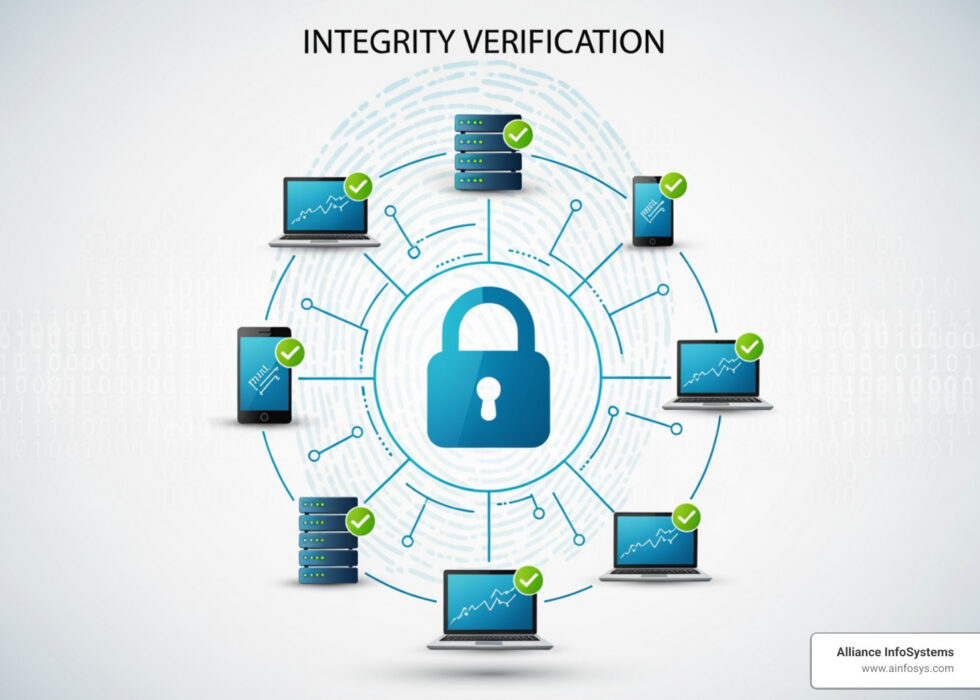
At its heart, integrity verification is about wholeness. Whether we are talking about a digital file, a server in your data center, or a physical product on a shelf, we need a way to prove that what we have is exactly what the creator intended. In the digital field, this often starts with Data Integrity Verification, a process that ensures data remains accurate and consistent over its entire lifecycle.
For Maryland businesses, adhering to NIST SP 800-152 standards is the gold standard for information assurance. These standards help us move beyond “hoping” our data is safe to “knowing” it hasn’t been touched by unauthorized hands.
Hardware Roots of Trust and TCG Standards
Software can be tricked, but hardware is much harder to fool. This is where the Trusted Computing Group (TCG) comes in. They’ve developed standards for a “Hardware Root of Trust,” most commonly found in the Trusted Platform Module (TPM) 2.0.
Think of a TPM as a secure vault inside your computer. It holds cryptographic keys and measures the “health” of your system before it even starts. By using platform certificates, manufacturers can bind a device’s unique identity to its physical components. When you buy a new server, you can verify these verifiable artifacts to ensure that no one swapped out the high-end RAM for a cheaper, counterfeit version during shipping. This “device binding” is the first line of defense in a modern supply chain.
Cryptographic Techniques for Data Integrity Verification
Once the hardware is secure, we turn our attention to the data. We use several clever math tricks to ensure File verification is foolproof:
- Digital Signatures: These are like a wax seal on an envelope. If the seal is broken, you know the contents have been tampered with.
- Merkle Trees: These allow for efficient and secure verification of large data structures. Instead of checking a massive file all at once, you can verify small “leaves” of data against a “root” hash.
- Signature Chaining: This technique links blocks of data together. If one link in the chain is altered, the entire chain fails verification.
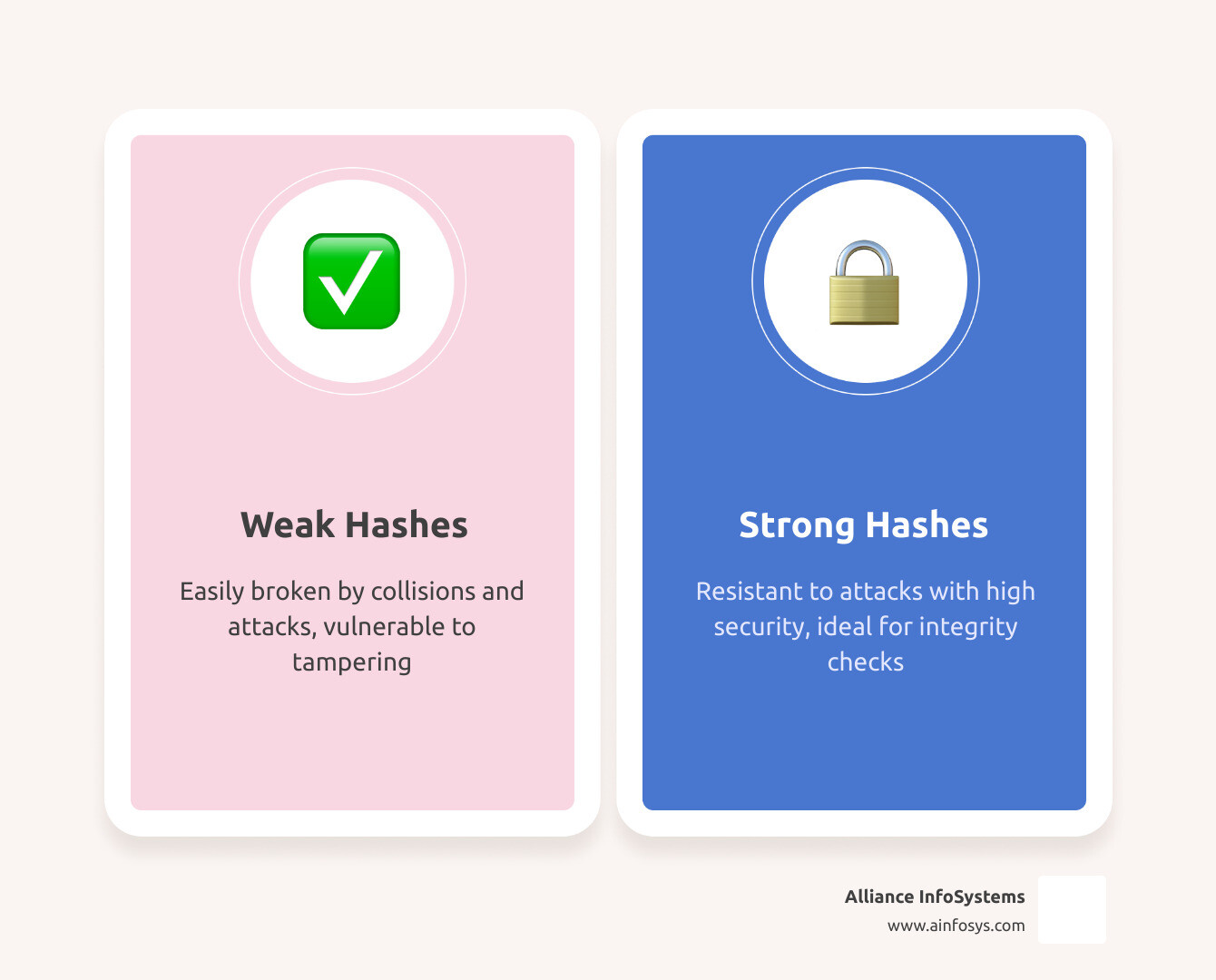
The most common tool in our shed is the SHA-256 hash. Older methods like MD5 or SHA-1 are now considered “broken” because of hash collisions—where two different files can end up with the same hash. For any modern Maryland business, SHA-2 (like SHA-256) or SHA-3 is the only way to go for reliable integrity verification.
Detecting Threats Across the Product Lifecycle
Threats aren’t static; they evolve as a product moves from the factory to your office. We see risks like counterfeiting (fake parts), tampering (adding malicious “backdoors”), and unauthorized firmware alterations.

Physical Inspection Technologies in Manufacturing
In the manufacturing world, integrity verification is often physical. If a box of chocolates is missing one piece, it’s an integrity failure that hurts brand reputation. Manufacturers use:
- Weight Measurement: A simple but effective way to catch missing items.
- X-ray Systems: These can “see” through packaging to detect malformed objects or even metal contaminants that shouldn’t be there.
- High-Resolution Cameras: These check for sealing integrity. If a food product isn’t sealed correctly, bacteria can get in, leading to safety impacts and massive recalls.
Validating Computing Device Integrity
For the IT side of things, we look to NIST SP 1800-34. This guide provides a roadmap for validating computing devices. It’s not enough to just plug a new laptop in and start working. We recommend:
- Acceptance Testing: Checking the device against the manufacturer’s platform manifest the moment it arrives.
- Component Binding: Ensuring the serial numbers of the SSD, motherboard, and CPU match what was promised.
- Operational Monitoring: Continuously checking the system while it’s in use to detect if someone tries to inject malicious code into the BIOS or firmware.
Implementing a Verifiable Integrity Framework
Building a framework means choosing the right tools for the job. You wouldn’t use a screen door for a submarine, and you shouldn’t use weak hashes for sensitive data.
| Method | Strength | Primary Use Case | Recommended? |
|---|---|---|---|
| CRC32 | Very Low | Error checking in network cables | No (for security) |
| MD5 | Low | Legacy file identification | No (obsolete) |
| SHA-1 | Medium-Low | Backward compatibility | No (deprecated) |
| SHA-256 | High | Standard file & data integrity | Yes |
| SHA-3 | Very High | Future-proof security | Yes |
Deterministic vs. Probabilistic Verification
When we verify data, we can be deterministic (checking every single bit) or probabilistic. In complex cloud databases, we might use “fake tuples” (dummy data). If a query doesn’t return the fake data we expected, we know the database has been tampered with. This ensures freshness assurance—proving that the data you’re seeing is the most recent version, not a “replay” of old data.
Automated Software Attestation and Transparency
The software world has moved toward “Transparency Logs” using tools like Sigstore. When a developer releases software via a GitHub workflow, they can create a DSSE predicate—a fancy way of saying a signed statement about the code.
By using Merkle inclusion proofs, anyone can check a public log to see that the software they downloaded is the exact version the developer signed. This makes the software supply chain much harder for hackers to hijack.
Continuous Monitoring and Integration Strategies
Integrity verification isn’t a “one and done” task. It’s a lifestyle. You need to know if a device becomes compromised three months after you bought it.
Integrating Commercial Validation Tools
Modern enterprises use a mix of tools to keep a watchful eye. We often integrate SIEM (Security Information and Event Management) systems with asset management platforms.
- Configuration Baselines: We set a “known good” state for every device. If a setting changes without a ticket, the SIEM alerts us immediately.
- Detached Configurations: We watch for hidden dependencies that might bypass standard checks.
- API Integration: Using APIs allows your security tools to “talk” to each other, automating the integrity verification of cloud resources and local servers alike.
Compliance Standards and Processing Integrity
For our B2B clients in Maryland, SOC 2 compliance is often a requirement. SOC 2 focuses on five “Trust Services Criteria,” one of which is Processing Integrity.
- Type I Audits are a snapshot in time—do you have the right controls?
- Type II Audits are much more rigorous, proving those controls worked for 6 to 12 months.
Achieving these standards isn’t just about checking a box; it provides a security foundation that reduces liability and builds massive trust with your customers.
Frequently Asked Questions about Integrity Verification
What is the difference between simple checksums and cryptographic hashes?
A simple checksum (like CRC) is designed to catch accidental errors, like a “hiccup” in a Wi-Fi signal. It’s easy for a hacker to manipulate a file so the checksum stays the same. A cryptographic hash (like SHA-256) is designed to be “collision-resistant.” Even changing a single comma in a 500-page document will completely change the hash, making it impossible to forge.
How does a Merkle hash tree ensure query result integrity?
Imagine a tree where every “leaf” is a piece of data. Each pair of leaves is hashed together to create a “branch,” and branches are hashed until you reach the “root.” If you want to prove a specific piece of data is part of the set, you only need to provide a few hashes from the tree (the “path”) to show they lead to the root. This allows you to verify that no data was added, removed, or modified without needing the entire dataset.
Why is hardware-based integrity superior to software-only checks?
Software lives in memory and can be altered by malware that has “root” or “admin” privileges. Hardware-based integrity, like a TPM, is physically isolated. It performs its checks before the operating system even loads. It’s the difference between a software password (which can be keylogged) and a physical key (which must be physically stolen).
Conclusion
Navigating integrity verification can feel like learning a new language, but it is the cornerstone of modern security. Whether you are protecting your manufacturing line from malformed products or securing your server room from counterfeit hardware, the principles remain the same: verify early, verify often, and use the strongest tools available.
At Alliance InfoSystems, we’ve spent over 20 years providing Managed Security Services to the Maryland community. We understand that every business is unique, which is why we offer flexible, customized, and cost-efficient solutions. From helping you achieve SOC 2 compliance to implementing hardware roots of trust, our team is here to ensure your data and devices stay exactly as they should be.
Don’t leave your integrity to chance. Reach out to us today to see how we can build a proactive protection plan custom to your needs.