
Why Real Estate Professionals Need IT Solutions Now
IT solutions for real estate are digital tools that help property professionals manage listings, streamline transactions, and operate more efficiently. These technologies range from property management systems and CRM platforms to virtual tour software and AI-powered analytics.
Key IT Solutions for Real Estate:
- Property Management Software (PMS): Automates tenant tracking, rent collection, and maintenance.
- Customer Relationship Management (CRM): Manages leads, client interactions, and follow-ups.
- Transaction Management Systems: Handles document workflows, e-signatures, and compliance.
- Multiple Listing Service (MLS) Integration: Syncs property data across platforms.
- Virtual Tour Technology: Creates 3D property experiences for remote viewing.
- AI-Powered Analytics: Predicts property values and analyzes market trends.
The property market is changing fast. The global PropTech market, valued at $27.3 billion in 2023, is projected to reach $119.9 billion by 2032. This rapid growth shows that what was once a paper-driven business is now powered by software that defines your competitive edge. Professionals using AI see a 7.3% increase in productivity and a 6.9% boost in customer interaction.
However, many small to medium-sized real estate businesses struggle with managing complex IT, protecting client data, and choosing the right technology on a budget.
This guide covers the essential IT solutions changing real estate, from operational platforms to AI and VR technologies that improve client experiences. You’ll learn what works, what to avoid, and how to measure the ROI from your tech investments.
Core Software Changing the Property Market
The real estate industry is moving from filing cabinets to digital solutions that make your life easier. The right IT solutions for real estate aren’t about fancy tech; they’re about closing deals efficiently and nurturing leads effectively.
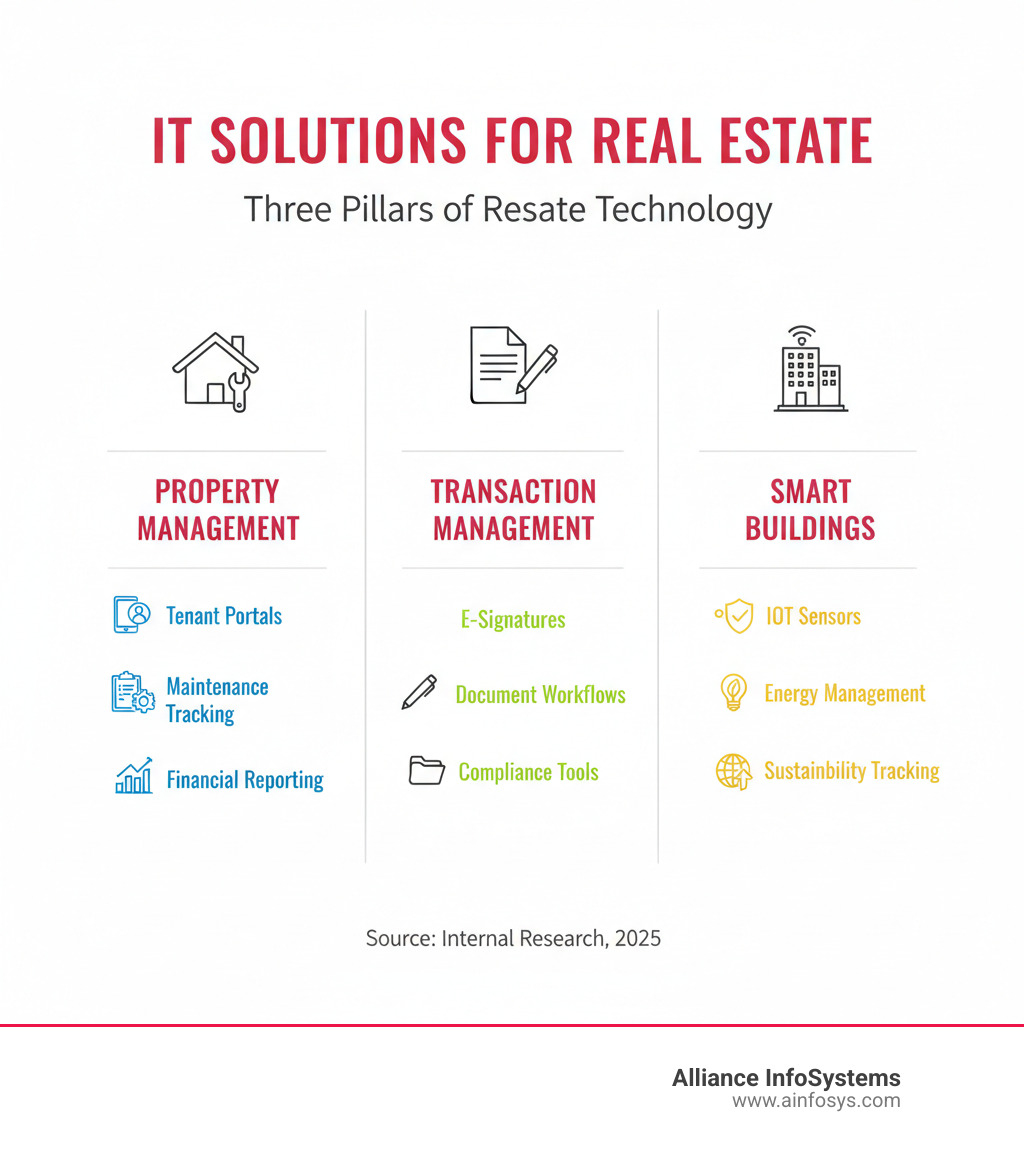
Three types of software form the backbone of modern real estate: Property Management Software (PMS) for daily operations, Customer Relationship Management (CRM) for client relationships, and Transaction Management tools for closing deals. When integrated with Internet Data Exchange (IDX) and Multiple Listing Service (MLS), you get a complete system that works for you.
Streamlining Operations with Property Management Software
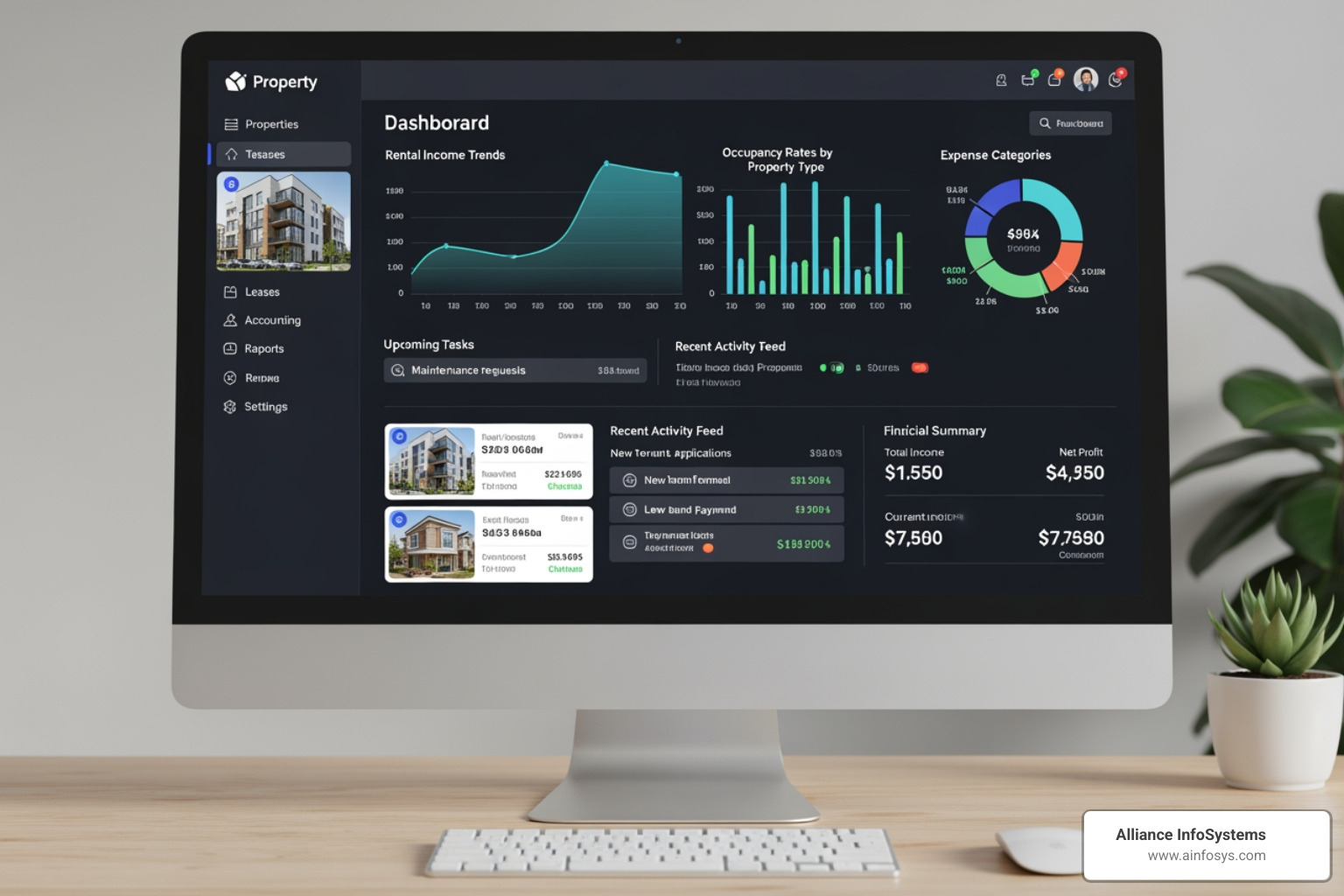
Property Management Software is your command center for all property-related tasks. These cloud-based platforms handle everything from listing rentals and screening tenants to managing leases and collecting rent.
A solid PMS provides a tenant portal for online rent payments and maintenance requests, reducing phone calls and manual tracking. Rent collection is automated, ensuring steady cash flow. Maintenance requests are tracked from start to finish, so nothing is missed. Financial reporting features generate detailed reports on property performance, while lease management organizes agreements and sends renewal reminders. The software also helps with vacancy tracking to streamline the re-leasing process.
Many systems include accounting automation to simplify bookkeeping. For specialized needs like affordable housing, some platforms offer targeted solutions. Check out Yardi Breeze Premier Affordable Housing to see how these tools handle complex compliance simply.
Nurturing Relationships with CRM and Lead Generation Tools
Real estate runs on relationships, and a CRM acts as your digital memory and assistant. It tracks every client interaction, preference, and follow-up, ensuring no opportunity is lost.
Client tracking centralizes contact details, property preferences, and communication history. Lead prioritization uses data to identify the most promising leads, so you can focus your efforts effectively. Automated follow-ups are a key feature, allowing you to schedule personalized messages that keep you top-of-mind with prospects. Sales pipeline management provides a visual map of every deal, from first contact to closing, helping you forecast income and spot bottlenecks.
Many real estate CRMs also integrate marketing campaigns, allowing you to launch and track targeted emails from one platform. For ideas on effective lead generation, look for platforms designed for agents that balance powerful features with affordability. A good CRM helps you build a strong pipeline and turn relationships into repeat business.
Closing Deals with Transaction Management Software
Transaction management software ensures the complex closing process goes smoothly. These platforms handle the paperwork, compliance requirements, and deadlines that accompany every real estate deal.
Here’s how different software types work together in your real estate business:
| Feature/Function | Property Management Software (PMS) | Customer Relationship Management (CRM) | Transaction Management Software (TMS) |
|---|---|---|---|
| Primary Goal | Daily operations, tenant and property lifecycle | Lead management, client relationships, sales pipeline | Streamline deal closing, ensure compliance |
| Key Activities | Rent collection, maintenance, lease management, accounting | Lead tracking, communication history, automated follow-ups | Document management, e-signatures, compliance checks, deadlines |
| User Focus | Property managers, landlords, accounting teams | Agents, sales teams, brokers | Agents, brokers, compliance officers, administrative staff |
| Core Benefits | Operational efficiency, reduced manual tasks, financial clarity | Improved lead conversion, stronger client loyalty, targeted marketing | Faster closings, reduced errors, audit readiness, security |
| Example Feature | Tenant portals for payments and requests | Automated email campaigns based on lead status | Digital signing for contracts, automated compliance checks |
Document management keeps contracts and disclosures in one secure, accessible place. E-signatures dramatically speed up the process; for example, Lone Wolf Authentisign makes it easy for real estate professionals to gather signatures in a quick, secure workspace. Documents can be signed in minutes, not days.
Compliance checklists and audit trails protect you from legal issues by ensuring all steps are completed and tracked. Deadline tracking prevents missed dates for inspections or contingencies, while collaboration portals give all parties secure access to necessary documents. This automation leads to faster, smoother closings and a better client experience.
The Next Wave: AI, VR, and Advanced Real Estate Technology
The real estate industry is now sprinting ahead with technology. IT solutions for real estate powered by Artificial Intelligence (AI), Virtual Reality (VR), and advanced automation are already delivering measurable results. Companies embracing these tools are seeing over 10% increases in net operating income—a significant competitive advantage.

How AI and Automation Boost Efficiency and Insight
AI acts as an intelligent assistant, handling repetitive tasks so your agents can focus on closing deals. Businesses using AI have seen a 7.3% increase in productivity and a 5.6% improvement in operational effectiveness. It’s not just about speed; it’s about smarter insights.
AI excels at market trend analysis, processing vast amounts of data to identify emerging trends. AI-powered property valuation models (AVMs) provide more accurate estimates by analyzing everything from comps to property photos. AI-powered chatbots can handle initial client inquiries 24/7, schedule tours, and triage maintenance requests. Automated lead scoring prioritizes leads based on their likelihood to convert, helping your team focus on the best opportunities.
As technology continues to evolve, real estate professionals who embrace these IT solutions for real estate will find themselves ahead of the curve. Leveraging AI and cloud tools streamlines operations and improves client service.
Enhancing Property Viewings with Virtual and Augmented Reality
Virtual and Augmented Reality are changing the property viewing experience. 3D virtual tours allow potential buyers to explore a property from anywhere, at any time. This is invaluable for remote buyers and busy professionals.
Digital twins—realistic 3D models of properties—achieve 300% more viewer engagement than traditional photos. Digital twins for property marketing allow buyers to visualize themselves in a space and expand your potential buyer pool globally. Digital staging virtually furnishes empty rooms, while Augmented Reality lets clients use their phones to overlay furniture or visualize renovations. These immersive experiences help clients make confident decisions faster.
Future Trends in IT solutions for real estate
The PropTech market is projected to grow from $27.3 billion in 2023 to nearly $120 billion by 2032. This growth will fuel further innovation.
Predictive analytics for investments will become more precise, forecasting market opportunities with greater accuracy. However, the most critical trend is sustainability tech. The real estate sector accounts for approximately 40% of global carbon dioxide emissions, making green technology a business imperative.
Smart buildings use IoT sensors to intelligently control lighting, HVAC, and energy consumption, reducing operational costs and environmental impact. Energy management software monitors consumption to identify savings, while carbon emissions reduction technologies are becoming standard. Future IT solutions for real estate must address sustainability as a core requirement.
Building a Secure and Scalable IT Foundation
As you adopt new IT solutions for real estate, your foundation is critical. A solid IT infrastructure must be secure, scalable, and mobile to support even the most innovative tools. This foundation rests on four pillars: cloud computing, mobility, data security, and a clear integration strategy.

The Role of Cloud Technology and Mobility
Cloud technology and mobility are essential for staying competitive. Cloud-based platforms provide anytime-anywhere access to your data and applications, allowing agents to manage their work from any device. Real-time data sync ensures everyone on the team is working with the most current information, improving collaboration.
Mobile apps for agents put the entire office in their pocket, boosting productivity on the go. Cloud solutions also mean reduced hardware costs, as you no longer need to maintain expensive on-site servers. Most importantly, they offer a scalable infrastructure that grows with your business without requiring a major IT overhaul.
Key Considerations for Adopting New IT solutions for real estate
Adopting new technology requires careful planning. Avoid common pitfalls by following these key steps:
- Needs Assessment: Start by identifying your specific business goals and pain points to ensure you’re solving the right problems.
- Budgeting: Look beyond subscription fees to consider the total cost of ownership, including implementation, training, and integration.
- Scalability Planning: Choose a solution that can grow with your business, handling more users and data as you expand.
- Vendor Selection: Look for providers with a strong track record in real estate, industry expertise, and excellent customer support.
- Employee Training: Prioritize comprehensive, hands-on training to ensure your team can use the new software effectively. This is essential for ROI.
- Integration: Ensure the new solution integrates seamlessly with your existing systems, like MLS and accounting software, to avoid data silos.
Enhancing Data Security and Privacy
Handling sensitive client and financial data makes security fundamental to your business reputation. Robust security measures should be built into your IT solutions for real estate.
Key security features include encryption to protect data in transit and at rest, and multi-factor authentication (MFA) to prevent unauthorized access. Role-based access control limits data visibility to only what is necessary for an employee’s job. Regular, automated data backup and a comprehensive disaster recovery plan are vital to ensure business continuity after an outage or attack.
Finally, your software must help you maintain compliance with regulations like GDPR and CCPA. Look for features like compliance checklists and digital audit trails to protect your clients and your business from legal risk. With over 20 years of experience, we know that robust security builds client trust and protects your business from devastating breaches.
Maximizing Your Technology Investment
Investing in IT solutions for real estate comes with real costs, and you need to know they’re worth it. Maximizing your technology investment requires measuring what matters, avoiding common pitfalls, and approaching implementation strategically.
Measuring the ROI of Real Estate IT
ROI isn’t just about dollars; it also appears in less tangible, but equally important, ways. Key metrics to track include:
- Time Saved on Tasks: Automation can free up around 10 hours per week for agents, allowing more time for client-facing activities.
- Increased Lead Conversion Rates: A good CRM helps you prioritize and follow up with the hottest leads, improving conversion.
- Faster Deal Closings: Transaction management tools can shave days or weeks off your closing timeline.
- Reduced Operational Costs: Streamlined processes can cut operational expenses by 20% through savings on paper, redundant systems, and travel.
- Improved Client Satisfaction: Modern digital experiences can lead to a 30% increase in client satisfaction, which drives referrals and repeat business.
- Revenue Growth Per Agent: Efficient tools can help agents achieve 20% more transaction volume.
Tracking these metrics consistently is the only way to know if your technology investment is truly paying off.
Common Challenges and Mistakes to Avoid
Over our 20 years in IT, we’ve seen the same preventable mistakes derail technology projects. Here are the most common ones to avoid:
- Skipping the Needs Assessment: Don’t buy software without first defining your business goals and pain points.
- Poor User Training: Even the best software is useless if your team isn’t trained to use it. Budget for comprehensive training from day one.
- Choosing Overly Complex Software: More features aren’t always better. Select a solution that fits your team’s actual needs.
- Ignoring Integration Needs: Ensure your new software connects with existing tools like MLS and accounting systems to prevent data silos.
- Failing to Get Team Buy-in: Involve your team early in the selection process to build support and ensure adoption.
- Rushing Implementation: Use a phased rollout to work out kinks, gather feedback, and avoid disrupting your operations.
At Alliance InfoSystems, our consultative approach helps you avoid these pitfalls. We provide flexible, cost-efficient services to ensure your technology works for you, not against you.
Frequently Asked Questions about Real Estate IT Solutions
How do IT solutions help with compliance and regulatory requirements?
IT solutions for real estate act as a built-in compliance officer. They use automated checklists to guide you through required steps and create digital audit trails that record every action for easy auditing. Secure document storage centralizes contracts and disclosures, while e-signature validity ensures digital documents are legally sound. Reputable software providers also issue regular updates to reflect changes in regulations like GDPR and CCPA, keeping you current without constant research. This automation reduces human error and saves countless hours.
How does real estate software support mobile and remote work?
Modern real estate software is designed for work on the go. Cloud-based platforms make all your data and tools accessible from any internet-connected device. Dedicated mobile apps provide full functionality on smartphones and tablets, allowing you to manage your entire workflow from the field. Real-time data synchronization keeps your whole team on the same page, no matter where they are. Some solutions even offer offline access, so you can keep working without a signal. This mobile-first approach boosts productivity and improves client responsiveness.
What are the first steps to integrating new IT solutions?
Successful integration of new IT solutions for real estate follows a few key steps. First, identify specific business goals to define what problems you need to solve. Second, research and select appropriate software that addresses those goals, fits your budget, and can scale with your business. Third, develop a phased implementation plan, starting with a pilot group to work out kinks before a company-wide rollout. Finally, prioritize team training and support. Show your team how the new tools will make their jobs easier and provide ongoing help to ensure successful adoption.
Conclusion
In today’s market, adopting advanced IT solutions for real estate is no longer optional—it’s essential for staying competitive. From PMS and CRM platforms to AI and VR, the right tools save time, reduce errors, and help you deliver superior service.
The results are clear: businesses see significant gains like 7.3% higher productivity, 30% better client satisfaction, and 20% lower operational costs. However, technology is only as good as its foundation. A successful strategy requires robust data security, a scalable infrastructure, and proper team training.
At Alliance InfoSystems, we’ve spent over 20 years helping Maryland businesses steer these challenges. We’re not just an IT provider; we’re a partner who understands the unique pressures of real estate and translates technical complexities into practical, effective solutions.
The PropTech market will continue to evolve, but the need for operational efficiency and excellent client service remains constant. Your competitors are already investing in these tools, and your clients expect modern capabilities. The question isn’t whether to adopt new technology, but how quickly you can start.
Ready to future-proof your real estate business? Get expert help with your IT strategy and let’s build a stronger foundation together.