The Essential Guide to IT Support for Modern Therapy Practices
Remote & Hybrid Therapy IT Support is the specialized technology infrastructure and assistance that enables therapy practices to deliver secure, compliant, and reliable mental health services. It integrates telehealth platforms, digital tools, and secure systems to support providers whether they work from home, the office, or both.
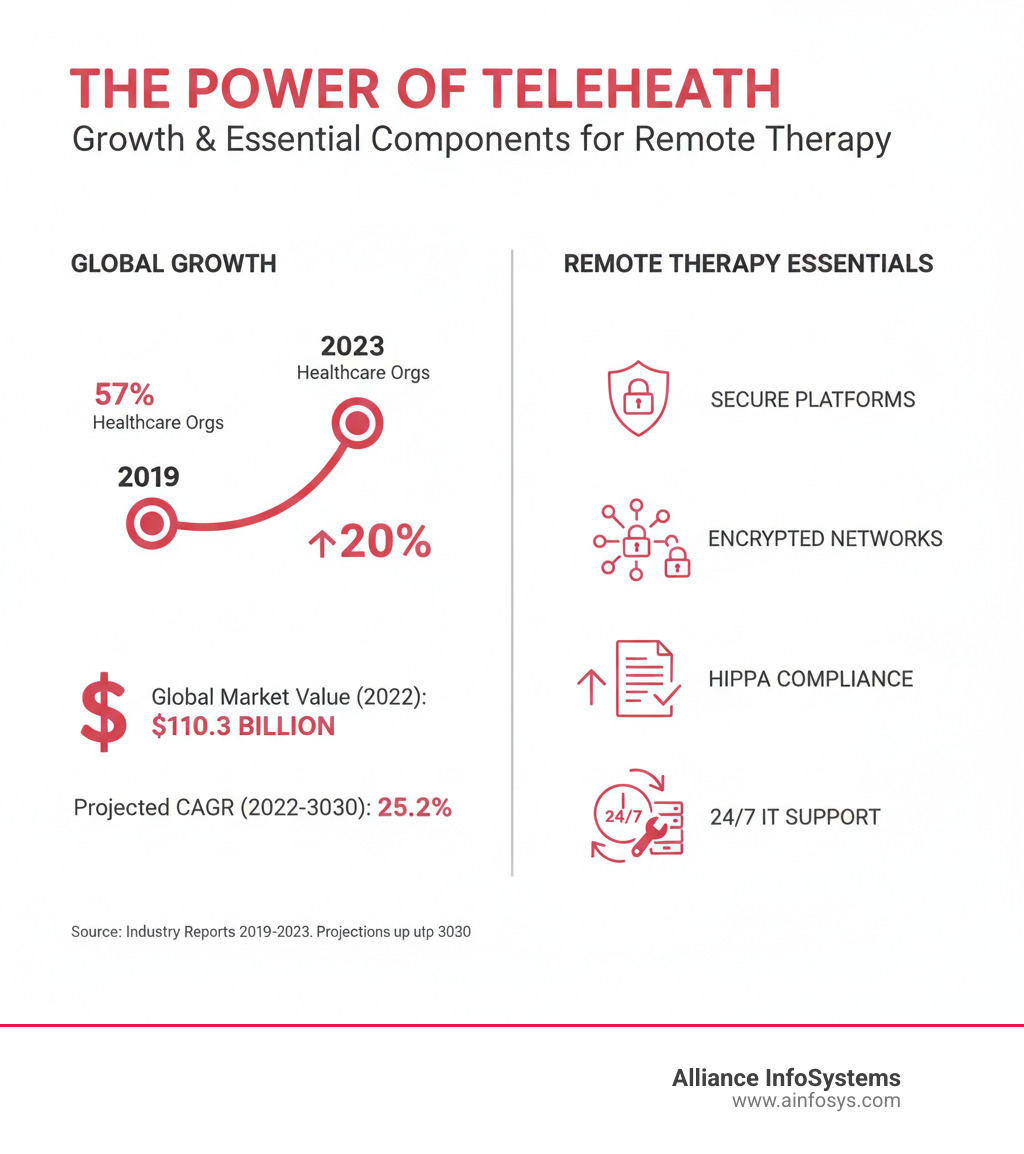
This requires a solid foundation of high-speed internet, HIPAA-compliant video platforms, secure EHR systems, and encrypted networks. Key security measures include end-to-end encryption and multi-factor authentication, backed by 24/7 help desk support and proactive monitoring. For compliance, practices need adherence to HIPAA and FERPA, robust data backup systems, and clear breach response plans. Critically, managed IT services often provide this enterprise-level security for less than the cost of hiring full-time staff.
The shift to remote and hybrid therapy is permanent. The global telehealth market, valued at $110.3 billion in 2022, is projected to grow at 25.2% annually through 2030. This growth offers incredible opportunities for therapists to serve more clients and for patients to gain convenient access to care. However, it also creates new challenges: How do you protect patient data on home WiFi? What happens when a platform crashes mid-session? How do you ensure HIPAA compliance with a remote workforce?
The answer is a strong IT foundation. Without it, practices risk data breaches, compliance violations, and frustrated patients and providers. This guide breaks down everything practice owners need to know about IT support for remote and hybrid care.
Building a Secure and Resilient IT Foundation
Your practice’s IT infrastructure is the foundation that supports everything you do. For remote and hybrid therapy, you need technology that is reliable, secure, and invisible when it’s working correctly. Remote & Hybrid Therapy IT Support ensures all the moving pieces—hardware, software, and networks—work together seamlessly, letting therapists focus on helping people.
This foundation includes physical hardware, network connectivity, software platforms like telehealth tools and EHRs, and secure data management that integrates these systems into a unified whole.
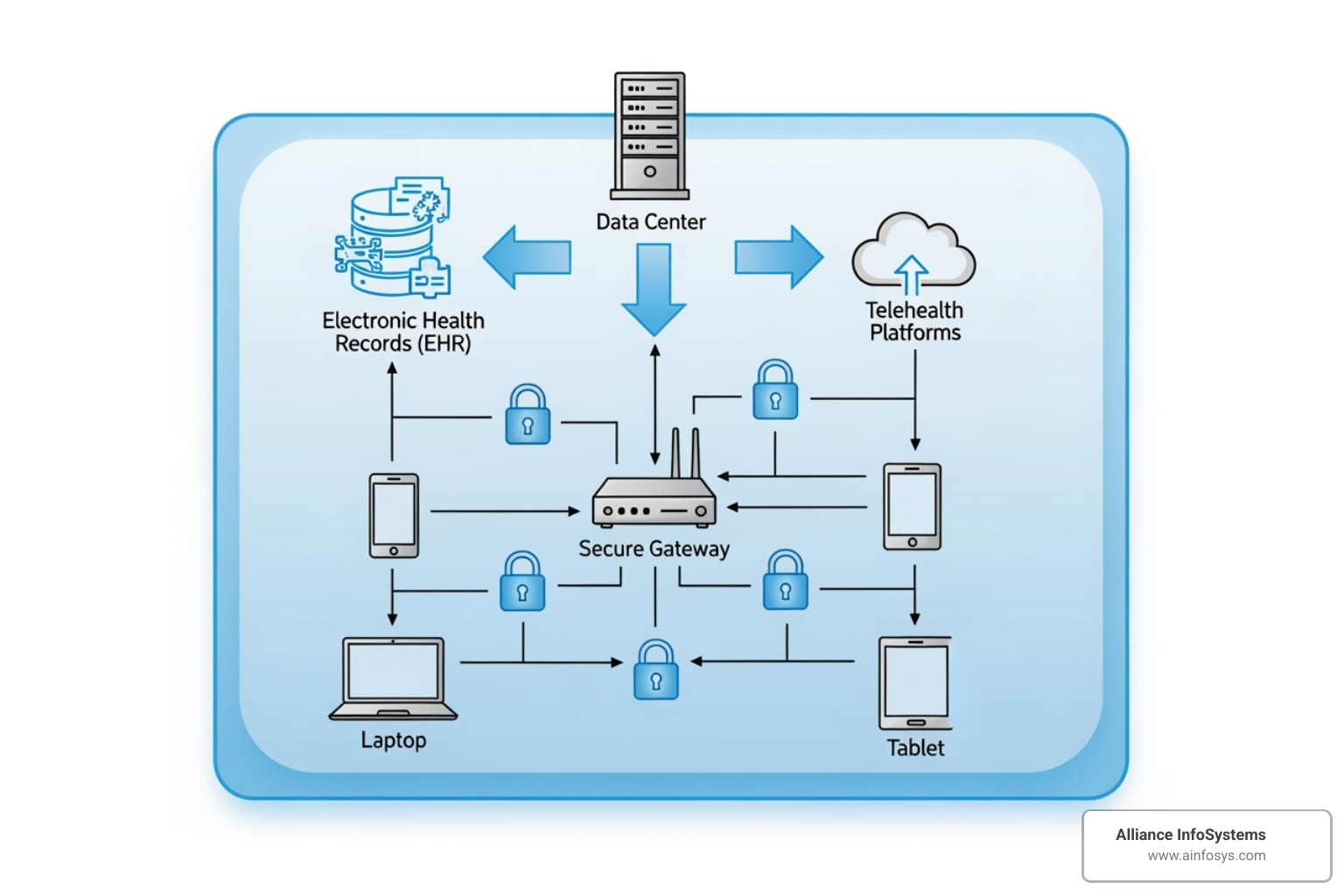
Without proper integration, a therapist might juggle separate systems for patient records, video sessions, and Remote Therapeutic Monitoring (RTM), leading to duplicated work and errors. Professional IT support connects these systems, allowing RTM data to flow into the EHR and therapists to document sessions directly during a video call. This integration dramatically reduces administrative tasks and frees up more time for patient care.
Building this foundation also means planning for disasters. Cloud Computing Services offer flexibility and remote access, while solid Data Backup & Recovery solutions ensure you’re never one server crash away from losing years of patient records.
Core Hardware and Network Components
Reliable remote therapy starts with the right physical equipment and connections.
- High-speed internet is your lifeline. You need fast, stable connectivity that won’t drop mid-session. A mobile hotspot is a good backup for emergencies. The digital divide remains a challenge, as many patients, particularly in rural or lower-income areas, lack reliable home internet.
- Quality webcams and microphones are essential. In therapy, where non-verbal cues are critical, clear audio and video are necessities, not luxuries. External devices are far superior to built-in laptop options.
- Secure routers with WPA2 or WPA3 encryption and up-to-date firmware are your network’s front door. An outdated router is a major security vulnerability.
- VPNs (Virtual Private Networks) create a secure, encrypted tunnel for accessing patient records from any location, making it as secure as being in the office.
- Work-issued or dedicated devices are strongly recommended for handling Protected Health Information. This creates a clear boundary between personal and professional use, making it easier to enforce security policies and protect therapist privacy.
These components work together to create strong Network Security, your first line of defense against cyberattacks.
Essential Software and Platform Integration
With a solid hardware base, the right software brings your remote practice to life.
- Your HIPAA-compliant telehealth platform is the centerpiece, offering secure video conferencing and client management features. The vendor must sign a Business Associate Agreement (BAA), a legal requirement for any third party handling PHI.
- Electronic Health Records (EHR) systems are the central hub for all patient information. When integrated with your telehealth platform, therapists can document sessions in real-time and access patient history without switching applications.
- Practice management software handles scheduling, billing, and insurance claims. Integrating it with your EHR and telehealth platform automates the entire workflow, from appointment booking to payment processing.
- Secure communication tools are necessary for internal team discussions about patient cases, as standard messaging apps are not HIPAA-compliant.
- Remote Therapeutic Monitoring (RTM) devices like wearables and apps track patient data between sessions. This data must flow securely into your EHR to be useful for therapists.
Connecting these disparate systems is complex. Professional IT support is invaluable for creating an integrated environment where information flows seamlessly, redundancies are eliminated, and therapists have everything they need at their fingertips. Our cloud virtualization services help build these flexible, scalable, and resilient systems that support your practice instead of hindering it.
The Cornerstone of Trust: Security and Compliance in Teletherapy
In therapy, trust is everything. In a remote setting, that trust extends to every system, platform, and device that handles patient information. Protecting this data is a legal and ethical responsibility, as healthcare data breaches cost an average of $10.10 million per incident and can destroy a practice’s reputation.
Remote & Hybrid Therapy IT Support is about protecting the sacred trust between therapist and patient. Through measures like data encryption, stringent access controls, and regular risk assessments, we build multiple layers of protection around Protected Health Information (PHI).
Our Managed Security services create a digital vault around your practice’s data, defending against evolving cyber threats. You can also review our Top 10 Cyber Security Practices for general guidance.
Navigating HIPAA and FERPA Compliance
Compliance regulations are not obstacles; they are guardrails that protect patients. For therapy practices, two are paramount.
The Health Insurance Portability and Accountability Act (HIPAA) sets the national standard for protecting patient health information. If you provide therapy, HIPAA applies to you. Protected Health Information (PHI) is broad, including not just notes and diagnoses, but also appointment schedules and billing information. All of it must be secured.
Every vendor that handles PHI on your behalf—your telehealth platform, cloud storage provider, or email service—must sign a Business Associate Agreement (BAA). This legally binding contract ensures your vendors uphold the same HIPAA standards you do. Without a BAA, you assume massive liability. Even with the best security, breaches can happen, which is why every practice needs a data breach response plan to contain damage and notify affected patients. For official information, visit the Health Insurance Portability and Accountability Act (HIPAA) resource.
If your practice provides school-based therapy, the Family Educational Rights and Privacy Act (FERPA) also applies. This law protects student education records, and virtual therapy for students often involves information that falls under both HIPAA and FERPA. The intersection can be tricky, and your platforms and documentation must comply with both. Learn more at the official Family Educational Rights and Privacy Act (FERPA) site.
An expert IT partner can ensure your technology and policies align with these complex regulations.
Key Security Measures for Remote & Hybrid Therapy IT Support
Effective security is about layers of protection, not a single solution.
- Multi-factor authentication (MFA) is one of the most powerful measures. It requires a second verification step (like a code from your phone) in addition to a password, blocking unauthorized access even if a password is stolen.
- Endpoint security protects every device connected to your network (laptops, tablets, phones) with antivirus, anti-malware, and intrusion detection systems. This is crucial for preventing breaches when devices are used on public WiFi.
- Regular security audits are systematic reviews of your IT infrastructure to find and fix weaknesses before criminals can exploit them.
- Staff security training is critical, as technology is useless if your team isn’t trained to spot phishing emails and use strong passwords. Regular training turns your staff into your strongest defense.
A Managed Security Operations Center (SOC) provides 24/7 monitoring, threat detection, and incident response for practices that want enterprise-grade protection. Our guide on What is SOC as a Service (SaaS)? explains how this advanced Cybersecurity service works.
Security and compliance are the foundation of trust that makes remote therapy possible. Get them right, and your patients can focus on healing.
Overcoming Common Problems in Remote and Hybrid Therapy
In remote therapy, a technical hiccup can interrupt a breakthrough moment or leave a patient feeling abandoned. A frozen screen or a platform that won’t load are more than just annoyances—they undermine the therapeutic process.

Common issues like connectivity problems, software glitches, device failures, and simple user error constantly threaten to derail sessions. Furthermore, the digital divide is a significant barrier, as about a quarter of U.S. households lack home internet, and many patients are not comfortable with technology.
This is where Remote & Hybrid Therapy IT Support becomes essential. The right support doesn’t just fix problems—it anticipates and prevents them, and resolves them quickly when they occur.
Proactive Troubleshooting for Remote & Hybrid Therapy IT Support
Great IT support is about catching problems before they start. We use remote monitoring and management tools to watch over your systems 24/7, looking for warning signs like degrading network performance or expiring security certificates. This allows us to fix issues before they can interrupt a therapy session.
When problems do arise, immediate access to an expert help desk support team makes all the difference. Our IT Support team is available to both therapists and patients, providing patient, jargon-free guidance to resolve issues quickly.
We also empower users with step-by-step guides and simple troubleshooting resources written in plain language. A quick pre-session tech check of audio, video, and internet connection can also prevent most common issues, saving countless sessions from technical difficulties.
The goal is to create an environment where technology works so smoothly that everyone can forget about it and focus on the therapeutic relationship.
Optimizing the Patient and Provider Experience
Technology should enable connection, not obstruct it. Minimizing downtime is crucial because every lost minute is taken from patient care. Our approach to Business Continuity and Disaster Recovery is focused on keeping therapy practices running smoothly, no matter what.
Beyond just working, technology must work well. Ensuring session quality means crystal-clear audio and stable video that allow conversations to flow naturally. We also focus on simplifying technology to make platforms intuitive and easy to use. If a patient struggles to log in, the system has failed.
When technology is reliable, high-quality, and simple, patient confidence grows. They can trust the process and fully engage in their therapy without worrying about technical failures. This confidence translates directly into better therapeutic outcomes. That’s what Remote & Hybrid Therapy IT Support is really about—creating a space where healing can happen, whether in person or online.
Choosing the Right Partner for Your Practice’s IT Needs
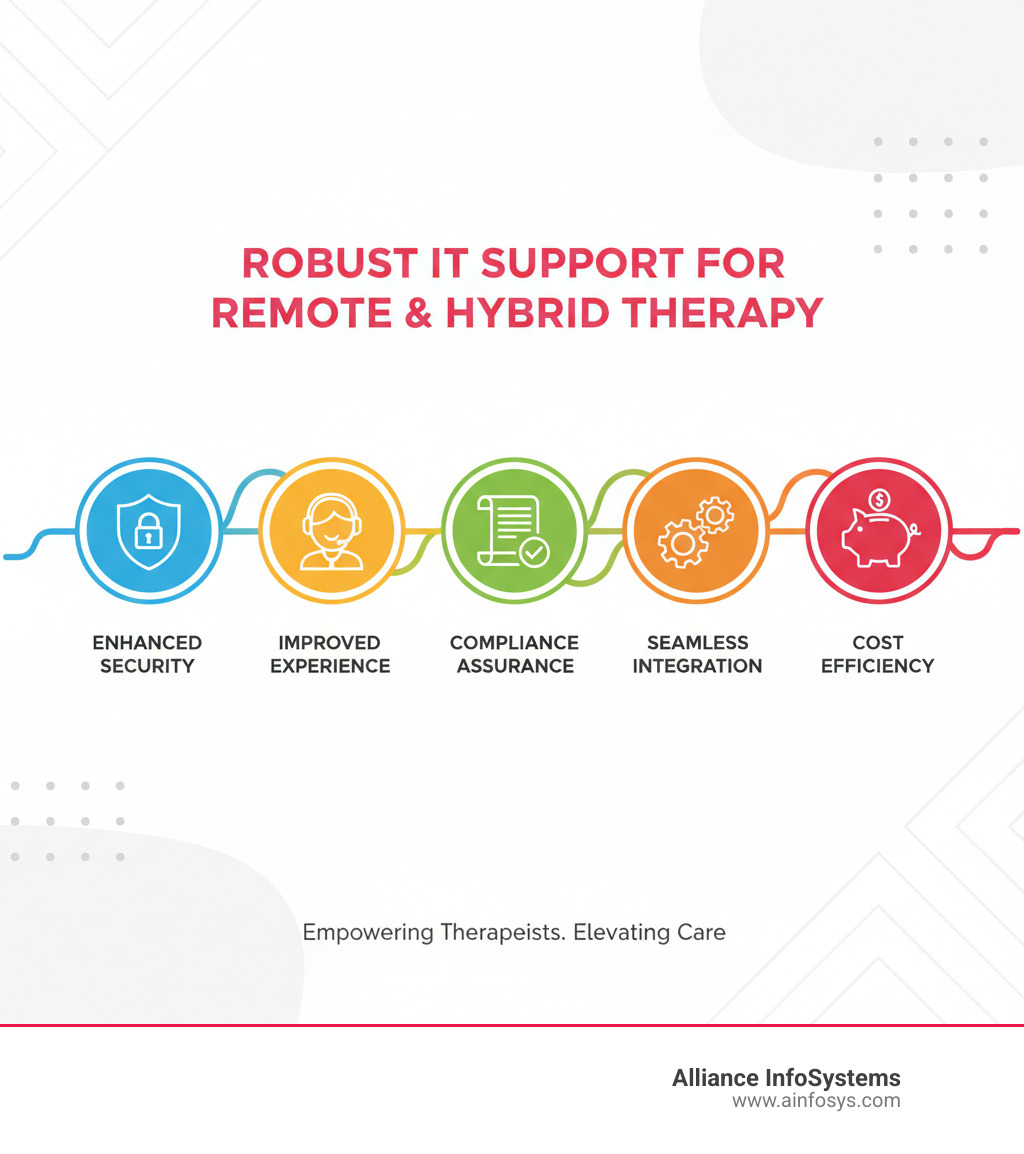
Choosing the right IT support is a critical strategic decision for any therapy practice using remote or hybrid models. The benefits are clear: improved security, a better patient experience, compliance assurance, and cost efficiencies. The question is how to achieve this.
Many practices face the choice between hiring in-house IT staff, which can be costly, or outsourcing. A Managed Service Provider (MSP) like Alliance InfoSystems acts as your outsourced IT department, offering comprehensive services with the flexibility and scalability your practice needs. This model provides access to enterprise-level expertise without the overhead of a full-time employee.
For a deeper look at this model, see our The Beginner’s Guide to Managed IT Services.
Key Considerations for Your Remote & Hybrid Therapy IT Support Strategy
When evaluating IT support solutions, asking the right questions is crucial. Your choice will impact everything from daily operations to long-term growth.
Here are key questions to ask a potential IT provider:
- Experience in Healthcare: Do they have a proven track record with therapy practices?
- Understanding of HIPAA and FERPA: Can they demonstrate deep knowledge and provide a BAA?
- 24/7 Support Availability: Do they offer around-the-clock monitoring and emergency support?
- Proactive vs. Reactive Support: Do they prevent issues or just fix them after they happen?
- Training Resources for Staff and Patients: Do they offer onboarding and ongoing training?
- Scalability: Can their services grow with your practice?
- Security Expertise: What specific cybersecurity measures do they implement?
- Integration Capabilities: Can they help integrate your EHR, telehealth, and other platforms?
- Communication and Reporting: How do they report on system performance and security?
If you need to expand your internal capabilities, IT Staff Augmentation can be a strategic move.
The Role of IT Augmentation and Managed Services
IT augmentation and managed services offer powerful solutions for practices looking to scale and improve efficiency.
- Filling Skill Gaps: Bring in specialized expertise for cybersecurity or cloud projects without hiring full-time staff.
- Strategic IT Planning: A good MSP helps you plan for the future with strategic guidance on technology investments and security roadmaps.
- Budget Predictability: Managed services typically operate on a fixed monthly fee, making IT expenses predictable.
- Access to Enterprise-Level Tools: Benefit from sophisticated monitoring, security, and management tools that would be cost-prohibitive to purchase alone.
With over 20 years of experience, Alliance InfoSystems, a Maryland-based IT services company, specializes in flexible and cost-efficient IT Augmentation and Managed IT Services for Small Businesses. We provide the robust Remote & Hybrid Therapy IT Support you need to thrive.
Frequently Asked Questions about Remote Therapy IT
Practice owners often have questions about the technology behind remote and hybrid care. Here are answers to some of the most common ones.
How can IT support help a small therapy practice?
Remote & Hybrid Therapy IT Support is a game-changer for small practices. It provides enterprise-level security to protect you from cyber threats that increasingly target small businesses. We ensure your systems and procedures are fully HIPAA compliant, avoiding hefty fines and reputational damage.
Most importantly, we manage all the technology headaches—updates, troubleshooting, integrations—so you and your therapists can focus on patient care. Our solutions are scalable, growing with your practice, and cost-efficient. Outsourcing to a managed service provider gives you expert support for a predictable monthly fee, which is typically far less than hiring in-house staff.
What is the single most important IT security measure for teletherapy?
While a multi-layered approach is always best, the single most impactful security measure is implementing mandatory Multi-Factor Authentication (MFA) across all systems.
MFA requires a second verification step in addition to a password, such as a code sent to your phone. This means that even if a password is stolen, unauthorized users are still blocked from accessing your EHR system, email, or telehealth platform. It’s a relatively simple measure that provides a massive boost to your security and dramatically reduces the risk of a data breach.
How does IT support handle a live session that is having technical issues?
When a technical issue strikes mid-session, dedicated Remote & Hybrid Therapy IT Support provides a rapid response. Therapists or patients can immediately contact our help desk, where technicians treat the issue with urgency.
Using remote access tools (with permission), we can quickly diagnose the problem, whether it’s related to network connectivity, software, or a device. We then provide clear, step-by-step guidance in plain language to resolve the issue.
Our primary goal is to restore the session as quickly as possible, minimizing disruption. If a permanent fix takes time, we’ll implement a workaround to get the session going again. Afterward, we analyze the incident to prevent it from happening again. This efficient process minimizes stress and allows therapy to resume promptly.
Conclusion
The future of therapy is here, and it’s a blend of in-person and digital care. In this new landscape, Remote & Hybrid Therapy IT Support is not optional—it’s the foundation upon which modern mental healthcare is built.

Trust, connection, and consistency are the cornerstones of effective therapy. In a virtual setting, technology is what enables all three. When your systems are secure and sessions run smoothly, technology becomes an invisible enabler, allowing the therapeutic relationship to flourish. The right IT support creates an environment where therapists can focus entirely on their patients, confident that the technology behind them is rock-solid, secure, and always available.
Technology should expand access to care, protect patient privacy, and make your practice more efficient. For therapy practices in Maryland and beyond, partnering with an experienced IT provider is about positioning your practice for long-term success. A robust IT strategy ensures you remain secure, compliant, and efficient, freeing you to deliver the exceptional care your patients deserve.
At Alliance InfoSystems, we have over 20 years of experience helping healthcare providers steer modern IT. We understand the unique challenges of therapy practices and are committed to creating solutions that work for you. Explore our Managed IT Services to see how we can support your remote and hybrid therapy goals, or Contact Us today to start a conversation.